
Leather Color Restoration: Why It Is More Than Touch-Up
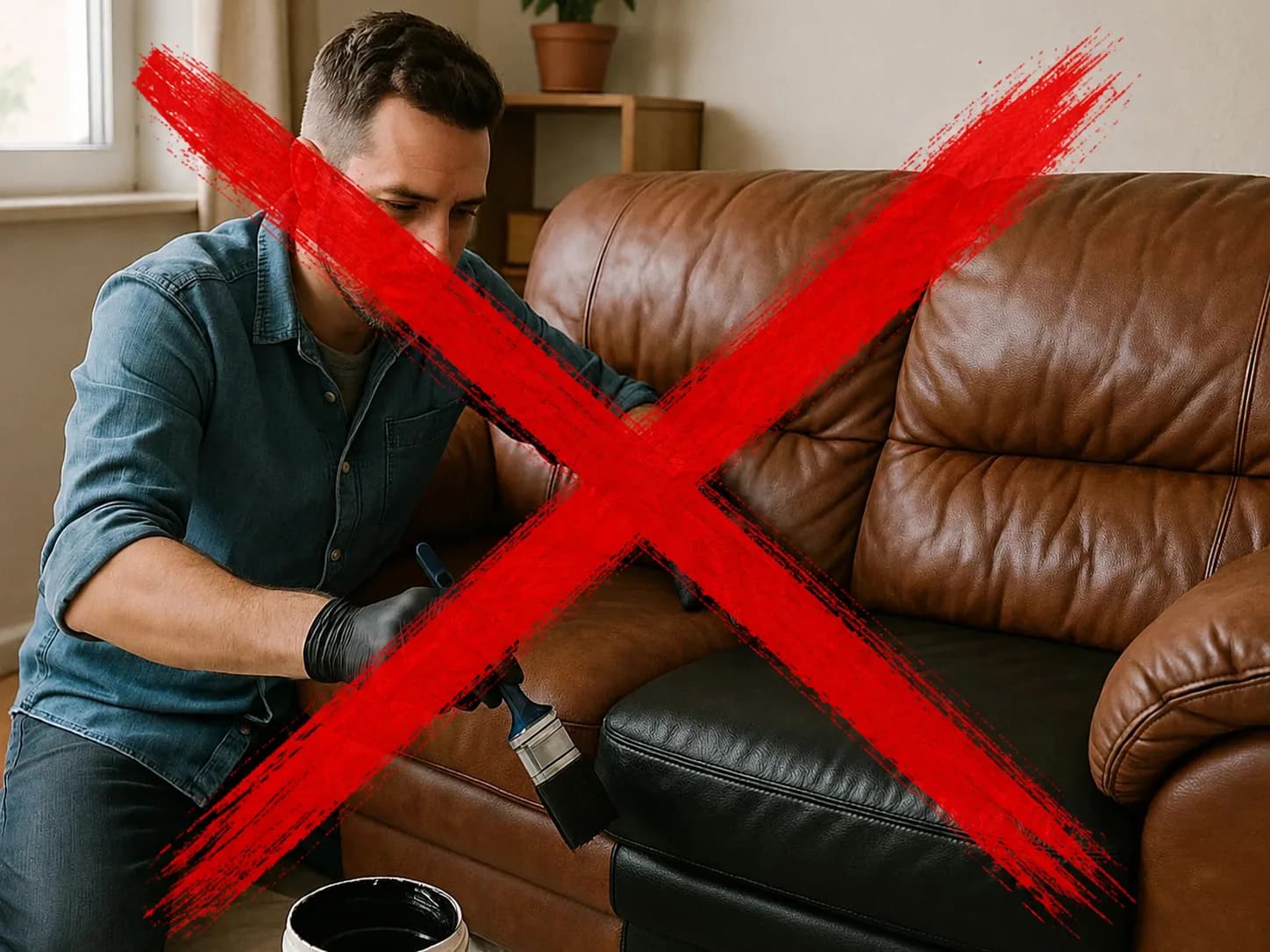
Many people imagine leather color restoration as a process similar to painting a wall, a cabinet, or another solid surface. The old color is covered, a new layer is applied, and the work is complete.
Leather does not work that way.
It is a natural, flexible material with a fibrous internal structure. It stretches when someone sits down, compresses under body weight, bends around cushions, and changes slightly with temperature and humidity. Its surface may also contain natural pores, oils, protective coatings, previous repair products, and contamination accumulated over years of use.
For these reasons, professional leather color restoration is not simply the application of paint. It is a multi-stage process that must account for the type of leather, the condition of its surface, the original finish, the source of the discoloration, and the way the furniture will be used afterward.
When the process is performed correctly, it can restore faded or worn leather while preserving its flexibility, texture, and natural appearance. When unsuitable products or shortcuts are used, the result may crack, peel, become sticky, or make the leather feel unnaturally stiff.
Leather Color Is Part of a Finishing System
The visible color of finished furniture leather is usually not created by one product alone.
Depending on the type of leather, the original manufacturing process may include penetrating dyes, pigments, binders, resins, waxes, feel modifiers, and a protective topcoat. These components work together to create the final color, sheen, texture, flexibility, and resistance to abrasion and moisture.
Pigments provide color and coverage, but they require compatible binders to adhere properly and form a continuous, flexible finish. A protective topcoat then helps control sheen, feel, wear resistance, and resistance to everyday contamination.
Professional restoration must rebuild the appropriate finishing system rather than simply cover the leather with an opaque coating.
Is Leather Dyed or Painted?
It can be either, depending on the leather.
Aniline leather is colored primarily with transparent dyes that penetrate the material without creating a uniform opaque surface. This preserves the natural grain, pores, scars, and color variation of the hide.
Pigmented leather, which is widely used for furniture, has a more protective surface finish. Its appearance is created with pigments held in flexible binders and protected by a topcoat. Semi-aniline leather falls between these categories, combining a dyed appearance with a light protective finish.
Therefore, not every leather sofa can be restored using the same coloring product or application method.
A transparent dye may be appropriate for one type of leather but provide insufficient coverage on another. A pigmented system may be appropriate for protected furniture leather but could destroy the natural appearance of aniline leather if applied incorrectly.
Before any color work begins, the leather must be identified and tested.
Why Leather Cannot Be Treated Like a Wall or Cabinet?
Walls, woodwork, and many rigid manufactured surfaces are relatively stable. Leather is constantly moving.
Every time someone sits on a sofa, the leather stretches and folds. Cushions compress. Creases open and close. Contact areas experience friction from clothing, skin, pets, and regular cleaning.
A coating used on leather must therefore:
Bond securely to the prepared surface
Remain flexible after curing
Move with the leather without cracking
Preserve an appropriate texture and feel
Resist abrasion and normal household use
Remain compatible with the original finish
Accept a protective topcoat
Avoid excessive thickness and stiffness
Ordinary household paint is not designed to meet these requirements. Even when it looks acceptable immediately after application, it may sit on top of the leather as a rigid film rather than functioning as part of a flexible leather-finishing system.
The first visible problems often appear on seat cushions, armrests, headrests, and other high-contact areas where the material moves and flexes most.
Why Surface Preparation Is the Most Important Stage?
The quality of leather color restoration is determined long before the new color is applied.
Furniture leather may contain body oil, perspiration, silicone-based conditioners, cleaning residue, wax, dirt, food oil, or products used during an earlier repair. These contaminants can prevent the new finish from bonding properly.
Applying color over contamination may temporarily hide the damage, but the underlying problem remains. The new finish can begin separating, changing color, cracking, or peeling after the furniture returns to normal use.
Professional preparation may include:
Inspecting and identifying the leather
Testing the original finish and color stability
Removing surface dirt and residue
Extracting body oil and other contamination
Removing unstable previous coatings
Deglazing or preparing the original protective finish
Repairing scratches, cracks, or damaged grain
Stabilizing weakened areas
Creating the correct surface for adhesion
Only after these stages are complete should the color system be applied.
This is why two estimates for what appears to be the same “color repair” may differ substantially. One may include the preparation required for a durable restoration, while the other may cover the visible damage without correcting what caused it.
Why Body Oil Must Be Removed Before Recoloring?
Body-oil contamination is particularly common on headrests, armrests, seat cushions, and recliners.
Leather gradually absorbs oil from skin, hair, lotions, and perspiration. The contamination may extend below the visible surface and continue migrating upward after the furniture has been cleaned.
Painting over body oil does not remove it.
The area may look improved initially, but the oil can interfere with adhesion and later migrate through the new finish. This can produce dark spots, tackiness, discoloration, or peeling.
Professional oil extraction is a gradual process. Specialized products may remain active for 24 to 48 hours, and heavily contaminated leather may require several treatment cycles.
Color restoration should begin only after the contamination has been reduced sufficiently and the surface has become stable enough to receive a new finish.
Does New Color Need to Penetrate the Leather?
The answer depends on the original leather and finishing system.
On absorbent aniline leather, a compatible dye may penetrate the fiber structure and preserve the natural appearance of the material.
On pigmented furniture leather, the restoration generally involves a thin, flexible surface-finishing system. The objective is not to soak opaque paint deeply through the hide. Instead, the products must form a controlled bond with the properly prepared upper surface while remaining flexible and visually compatible with the original leather.
This distinction is important.
Too little adhesion can cause premature wear and peeling. Excessive product can create a thick artificial layer that obscures the grain, changes the feel, and cracks as the leather moves.
A professional finish should be applied in controlled, thin layers. It should restore coverage without making the surface look or feel as though it has been wrapped in plastic.
What Happens When Ordinary Paint Is Used on Leather?
We regularly encounter furniture that has previously been coated with unsuitable household, automotive, craft, or general-purpose paint.
The immediate appearance may seem acceptable, especially in photographs. Problems often become visible after the furniture is used.
Common consequences include:
Cracking along creases and folds
Peeling in high-contact areas
A hard or plastic-like texture
Loss of the natural grain
Uneven gloss
Sticky or tacky areas
Color transfer
Poor adhesion around scratches
A visibly thick coating
Accelerated deterioration beneath the coating
An incompatible coating can also make future restoration more complicated.
Before the leather can be restored correctly, the previous coating may need to be removed. If it has bonded irregularly or reacted with the original finish, removal can disturb the grain surface underneath. Additional repair and preparation may then be required before the correct color system can be applied.
As a result, correcting an improper repair often costs more than restoring the original damage would have cost.
Can Paint Block Leather’s Pores?
This question requires a more precise answer than a simple yes or no.
Finished furniture leather may already have a protective surface coating from the manufacturer. Therefore, professional restoration is not based on leaving every natural pore completely open.
The real concern is compatibility, flexibility, thickness, and moisture behavior.
An inappropriate or excessively thick coating can seal the surface in a way that changes its feel, flexibility, and response to moisture. It may also trap contamination, interfere with normal movement, or separate from the original finish.
A properly designed leather-finishing system provides protection while remaining sufficiently flexible and compatible with the material underneath.
The goal is not to leave the leather unprotected. The goal is to avoid replacing its engineered finish with an unsuitable rigid coating.
How Professional Leather Color Restoration Is Performed?
The exact procedure varies according to the leather, but a professional furniture restoration generally follows several stages.
1. Leather Identification
The specialist determines whether the furniture is aniline, semi-aniline, pigmented, corrected-grain, split, bonded, vinyl, or another material.
This affects every later decision, including cleaning, repair, color formulation, application method, and protective finish.
2. Condition Assessment
The leather is checked for:
Surface wear
Fading and discoloration
Body-oil contamination
Dryness
Cracking or tearing
Previous repairs
Finish failure
Loss of flexibility
Structural deterioration
Color restoration is appropriate only when the leather retains enough strength to support a durable result.
3. Cleaning and Contamination Removal
Dirt, oils, conditioners, and residue must be removed using products appropriate for the leather type.
Heavily contaminated areas may require extended extraction rather than ordinary cleaning.
4. Removal of Unstable Finish
Loose, peeling, incompatible, or excessively thick coatings are removed or reduced. The objective is to create a stable foundation without unnecessarily damaging the original leather.
5. Surface and Grain Repair
Scratches, abrasions, cracks, and localized damage are repaired as appropriate. The repair must remain flexible and should reproduce the original grain rather than creating a smooth patch that remains visible after coloring.
6. Color Matching
The new color is matched to an unaffected area or formulated according to the approved color change.
Matching involves more than choosing a general shade such as brown or beige. Undertone, saturation, opacity, sheen, and the way the color changes under different lighting must all be considered.
7. Controlled Color Application
The color is applied in multiple thin layers rather than one heavy coat.
This allows the specialist to control coverage, preserve texture, and avoid excessive buildup. Some areas may require more coverage than others, especially when restoring severe fading or changing the original color.
8. Protective Finish Application
The protective topcoat is restored after the color has been applied.
The finish helps provide abrasion resistance, stain resistance, the correct level of gloss, and the expected tactile feel. Matte, satin, and gloss finishes require different formulations.
9. Curing and Final Inspection
The restored finish must cure before the furniture returns to normal use.
The completed surface is inspected for color consistency, texture, flexibility, sheen, adhesion, and coverage. High-flex areas receive particular attention because these are the first locations where an improperly applied finish is likely to fail.
Can a Leather Sofa Be Changed to a Different Color?
In many cases, yes.
Leather furniture can often be changed from one color to another, but the feasibility and expected result depend on:
The type of leather
The original finish
The current color
The desired new color
Previous repairs or coatings
The condition of the grain
The amount of wear and contamination
Changing a light color to a darker color is generally more straightforward than changing a dark sofa to a significantly lighter shade. A major color change may require additional preparation and more controlled layers to achieve even coverage.
The new color should also be evaluated under the lighting in the room where the furniture will be used. Natural light, warm interior lighting, and cool LED lighting can make the same leather color appear different.
A test area or physical color sample may be appropriate before a full color change is approved.
Will the Old Color Show Through as the Leather Wears?
Normal wear affects every finished leather surface, including factory-new furniture.
The purpose of professional restoration is to create a finish that wears gradually and consistently rather than peeling away or immediately exposing a sharply contrasting layer.
This depends on several factors:
Proper preparation
Strong adhesion
Appropriate color formulation
Thin and even application
Compatibility with the leather
Correct curing
Restoration of the protective topcoat
Regular maintenance after the service
No responsible specialist should promise that a restored surface will never show wear again. Leather remains a working material exposed to friction, pressure, body oils, sunlight, and cleaning.
However, a properly restored finish should behave like a professional leather finish rather than a temporary layer of paint.
Can Every Leather Surface Be Recolored?
No.
Color restoration may not be the correct solution when:
The leather has lost significant structural strength
Large areas are brittle or tearing
Body oil cannot be sufficiently extracted
Bonded leather is extensively peeling
A synthetic coating is separating from its backing
Previous repairs have severely damaged the grain
The material cannot support a durable new finish
The expected result would be temporary
In these situations, replacing individual panels, partially reupholstering the furniture, or completing a full reupholstery may provide a better result.
A cosmetic coating should not be used to disguise structural failure. If the underlying material continues to break down, the visible damage will return regardless of how carefully the surface is colored.
How Long Does Leather Color Restoration Last?
The service life of a restoration depends on:
The condition of the leather before restoration
The quality of the preparation
The products and techniques used
The amount of daily use
Exposure to sunlight and heat
Body-oil contamination
Pets and children
Cleaning and maintenance
Whether the original cause of the damage was corrected
A properly restored and maintained piece can remain attractive for years. A surface-level touch-up applied over oil, unstable finish, or weakened leather may fail within months.
Durability cannot be evaluated by the appearance of the furniture immediately after the work is completed. The quality of the preparation and the condition beneath the color are what determine how the restoration performs over time.
How Should Restored Leather Be Maintained?
After color restoration, the finish should be allowed to cure for the period recommended by the specialist.
Clients should generally avoid cleaning products and conditioners during the initial curing period. Afterward, the furniture should be maintained with products approved for its specific leather and finish.
Good maintenance includes:
Removing dust with a soft cloth
Cleaning spills promptly
Avoiding aggressive household cleaners
Avoiding alcohol, disinfectant wipes, and solvent-based products
Limiting direct sunlight and excessive heat
Addressing body-oil buildup before it becomes severe
Following the specialist’s aftercare instructions
More conditioner is not always better. Products selected for unfinished or absorbent leather may be inappropriate for protected furniture leather and can leave residue on the coating.
Leather Color Restoration Is a Technical Process
The difference between professional leather color restoration and ordinary painting is not simply the brand of colorant used.
A durable restoration requires the correct diagnosis, removal of contamination, preparation of the original finish, repair of damaged areas, accurate color matching, controlled application, an appropriate protective coating, and sufficient curing time.
The most visible stage—applying the color—is only one part of the process.
When each stage is performed correctly, faded and worn leather can often be restored without losing its flexibility, grain, or character. When preparation is skipped or unsuitable paint is applied, the result may conceal the damage temporarily while creating a more difficult and expensive problem underneath.
Frequently Asked Questions
Is leather color restoration the same as painting a sofa?
No. Professional restoration uses products and procedures developed for flexible leather surfaces. It may involve dyes, pigments, binders, repair compounds, and protective topcoats selected according to the type of leather.
Can regular paint be used on leather furniture?
Ordinary wall, craft, or general-purpose paint is not designed for the movement, flexibility, and surface chemistry of furniture leather. It may crack, peel, become stiff, or interfere with future restoration.
Can faded leather be restored to its original color?
In many cases, yes. The result depends on the type of leather, the extent of fading, contamination, previous repairs, and the remaining condition of the surface.
Can brown leather furniture be changed to another color?
Many pigmented leather pieces can be recolored. The difficulty depends on the original and desired colors, the leather type, and its condition. Major color changes require more preparation and controlled coverage.
Why does leather color sometimes peel after repair?
Common causes include body-oil contamination, insufficient cleaning, improper surface preparation, incompatible products, excessive coating thickness, poor curing, or structural deterioration of the leather beneath the finish.
Does leather need a protective coating after recoloring?
Most pigmented and semi-aniline furniture leathers require an appropriate protective finish. It helps provide abrasion resistance, stain resistance, the correct sheen, and the expected tactile feel.
How long should I wait before using restored furniture?
The required curing period depends on the products and scope of work. Follow the restoration specialist’s instructions and avoid cleaning or conditioning the surface until the finish has cured sufficiently.
Request a Professional Leather Assessment
Before recommending color restoration, we evaluate the type of leather, the condition of its protective finish, the presence of body oil or previous coatings, and the remaining strength of the material.
Send us photographs of the entire piece and close-up images of the damaged areas. We will explain whether the leather can be restored, whether any panels should be replaced, and which process will provide the most durable result.