
Leather Furniture Repair In San Antonio, TX: What Damage Can Be Fixed Without Reupholstery?
A damaged leather sofa does not always need complete reupholstery. Scratches, small tears, open seams, worn cushions, damaged panels, and localized surface wear can often be repaired while keeping most of the original leather intact.
For San Antonio, TX homeowners, professional leather furniture repair can be especially practical when the furniture has a strong frame, comfortable proportions, and damage limited to one or two high-use areas.
The important question is not simply how visible the damage is. A technician needs to determine whether the leather underneath the damaged area is still strong enough to repair.
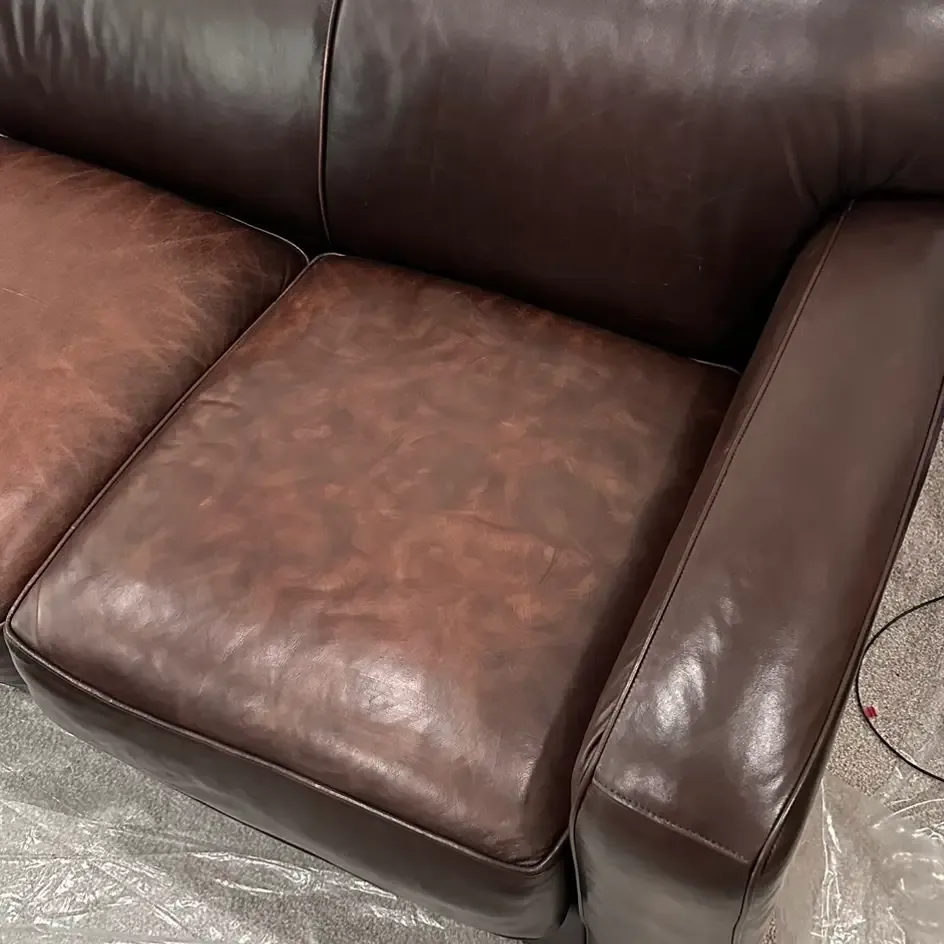
Common Types of Leather Furniture Damage
Leather furniture typically develops problems gradually. Seats, armrests, headrests, and front edges receive the most friction and body contact, so these areas often show wear first.
Common problems include:
- Scratches from pets or everyday use
- Small cuts and punctures
- Open or damaged seams
- Surface cracking
- Worn or missing color
- Stretched seat panels
- Compressed seat cushions
- Damaged piping or edges
- Localized tears
- Oil-darkened headrests and armrests
Some of these problems are primarily cosmetic. Others indicate that the leather itself is beginning to fail.
Professional leather furniture repair starts by separating surface damage from structural damage. A scratch in the protective finish requires a very different repair from a seat panel that has become thin enough to tear under normal use.
When Leather Sofa Repair Can Be Localized
Localized leather sofa repair works best when most of the furniture remains in good condition.
Small tears or punctures may sometimes be stabilized, filled, recolored, and refinished. Scratches and rubbed areas can often be repaired without replacing the complete panel.
Open seams are another common problem. If the surrounding leather remains strong, the seam may be restitched or reconstructed without replacing the entire upholstery.
Damaged piping and edges may also be repairable depending on how much material remains around the affected area.
The advantage of localized repair is that the original upholstery can remain in place wherever possible. This reduces unnecessary replacement and helps preserve the original appearance of the furniture.
However, a repair should not simply conceal weak leather. If the material around a tear has become brittle or thin, reinforcing one small area may only move the failure to the surrounding leather.
Scratches, Tears, and Cracks Require Different Repairs
Leather damage should not be treated as one category.
Light scratches may affect only the finish or pigment layer. Deeper scratches can expose the grain underneath but still leave the leather structurally intact.
Cuts and tears involve an actual separation of the material. Depending on their location and size, they may require backing material, flexible repair compounds, stitching, or panel replacement.
Cracking is different again.
Fine surface cracking may develop in the finish while the leather underneath remains flexible. Deep cracks that spread when the seat is compressed usually indicate deterioration through more of the leather structure.
For this reason, cracked leather couch repair should begin with an evaluation of flexibility and remaining material strength rather than simply filling the visible cracks.
When a Leather Panel Should Be Replaced
Sometimes replacing one section of leather is more reliable than repeatedly repairing the damaged surface.
Panel replacement may be appropriate when a seat or arm panel is:
- Torn through
- Severely stretched
- Brittle
- Missing material
- Damaged across a large area
- Previously repaired multiple times
- Too weak to support another surface repair
A technician can remove the damaged section and create a replacement panel while preserving the rest of the sofa or chair.
Matching leather requires attention to color, grain, thickness, texture, and sheen. An exact match is not always possible, especially on older furniture where the original leather has changed through years of sunlight and use.
Professional leather repair should account for these differences rather than assuming a new panel will automatically look identical to the surrounding material.
Cushion Problems Can Make Leather Damage Worse
Not every problem visible on a leather seat begins with the leather.
Compressed foam can cause upholstery to wrinkle, fold, and stretch. As the cushion loses support, the leather repeatedly collapses into the same areas when someone sits down.
Over time, these folds can develop into permanent creases, finish damage, and eventually cracks.
For this reason, leather couch repair may also require cushion reshaping or foam replacement.
Restoring the cushion underneath the leather can reduce stress on repaired upholstery and improve the appearance of the seat.
| Repair Type | Best For | Important Consideration |
|---|---|---|
| Surface repair and recoloring | Scratches, scuffs, and finish wear | Leather must remain structurally sound |
| Tear repair | Small localized cuts or punctures | Surrounding leather must be strong |
| Seam repair | Open stitching or separated seams | Material along the seam cannot be badly weakened |
| Cushion rebuilding | Flattened or misshapen seats | Helps reduce continued stress on leather |
| Panel replacement | Large tears, brittle leather, or worn-through sections | Color and grain matching must be managed |
What Professional Leather Furniture Repair Includes
A professional repair process begins with identifying the upholstery material and inspecting the damaged area.
The technician may evaluate the leather for flexibility, finish condition, contamination from body oils, stretching, previous repairs, seam damage, and cushion support.
Depending on the problem, repair may include:
- Cleaning and degreasing
- Scratch and scuff correction
- Flexible filling of minor defects
- Tear reinforcement
- Stitching or seam repair
- Color matching
- Protective finish application
- Panel replacement
- Cushion reshaping
- Foam replacement
The goal is to correct the source of the problem rather than simply improve the appearance for a short period.
Leather Furniture Repair in San Antonio, TX
Professional leather furniture repair can be a practical option when damage is localized and the underlying furniture remains in good condition.
Scratches, small tears, seam failures, cushion problems, and individual damaged panels do not necessarily mean an entire sofa or chair must be replaced or completely reupholstered.
The most reliable solution depends on the strength of the leather, location of the damage, cushion condition, and construction of the furniture.
Before replacing a damaged leather sofa, sectional, recliner, or chair, San Antonio, TX homeowners can have the piece evaluated to determine whether localized repair, cushion rebuilding, panel replacement, or more extensive restoration is appropriate.
Contact Lerega for professional leather furniture repair, leather sofa repair, panel replacement, cushion restoration, and furniture restoration services in the San Antonio area.