
Why Restore Leather Furniture Instead Of Replacing It? 8 Reasons Our Clients Give
What we can share is what we have heard from our clients.After years of working with leather furniture, we have heard the same reasons repeatedly from homeowners, families, collectors, and interior designers who chose restoration instead of replacement. Some of their reasons are financial. Others relate to construction quality, comfort, family history, environmental concerns, or the desire not to purchase more leather.
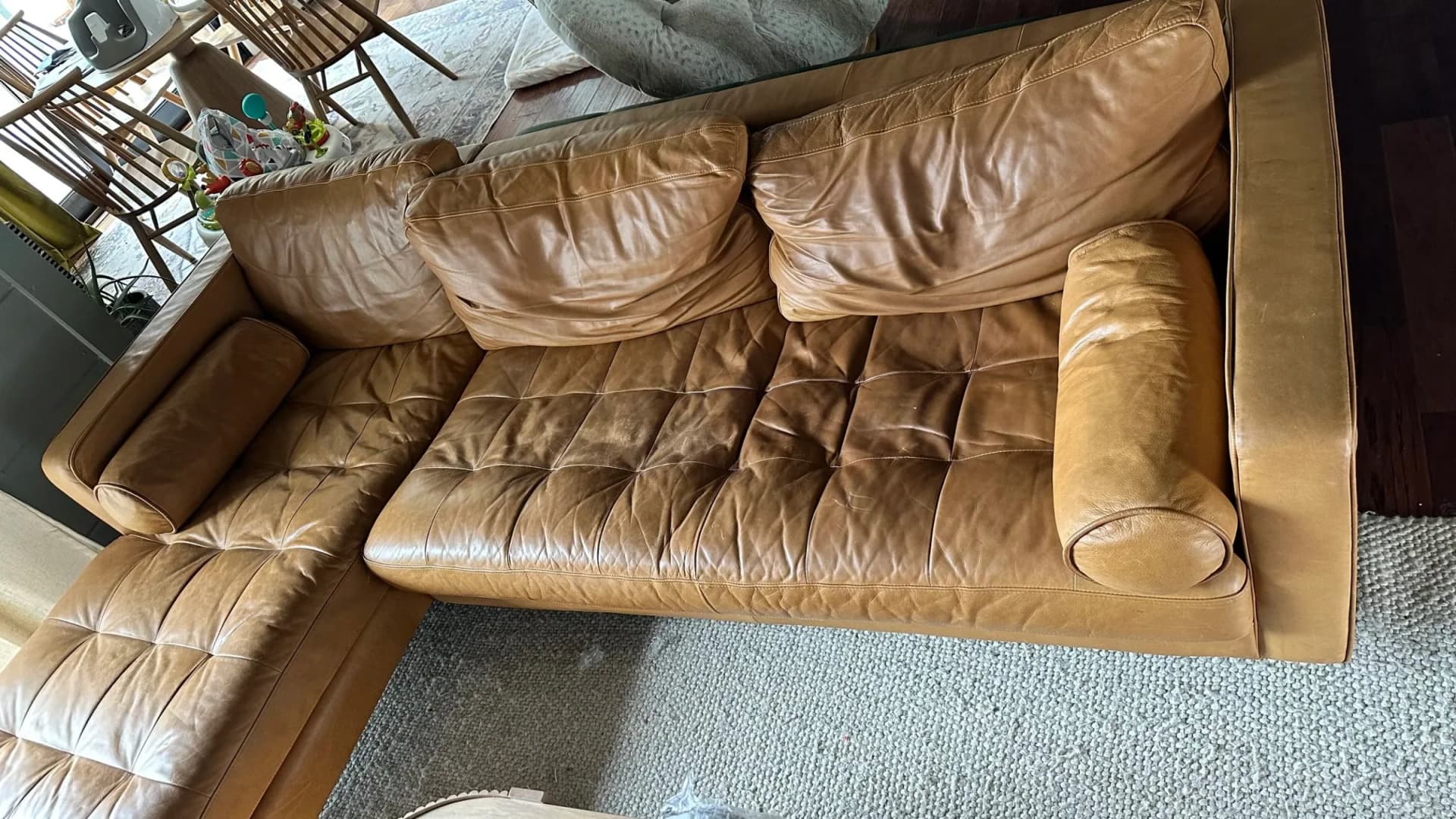
The following are the reasons our clients mention most often.
1. Their Older Furniture Feels Better Built
Many clients contact us after visiting furniture stores and comparing new sofas with the furniture they already own. One of the most common things we hear is that the new pieces did not feel as solid.
Age alone does not guarantee quality. Well-made and poorly made furniture can be found in every period. However, many older premium sofas and chairs that come into our shop have substantial frames, strong joints, durable suspension systems, and construction intended to support decades of regular use.
Some newer mass-market furniture is designed to be lighter and less expensive to manufacture and transport. Reducing the weight of the frame can lower shipping and handling costs, but clients often notice a difference in stability, rigidity, and overall feel.
A worn leather surface and a worn-out frame are not the same thing. If the frame remains strong, many clients see little reason to discard the entire piece because of fading, scratches, body-oil contamination, damaged cushions, or localized leather wear.
They would rather restore the parts that have aged than replace a structure that is still performing well.
2. They Do Not Want to Replace Substantial Leather With a Thinner Material
Another reason clients choose leather furniture restoration is the quality of the existing leather.
Leather is not one uniform material. A thick hide can be mechanically divided horizontally into separate layers. The upper layer is the grain layer, while the lower portion is known as a flesh split. Particularly heavy hides may also produce a middle split. This process does not create several new hides; it creates multiple leather layers from one hide.
Leather thickness is selected according to the intended product, and thin leather is not automatically poor-quality leather. However, the grain layer and the lower split layers have different structures and performance characteristics. Furniture can also be made from full-grain, corrected-grain, split, bonded, or synthetic materials, each of which ages differently.
Some clients own older furniture upholstered in substantial grain leather that still retains its strength and flexibility. When they begin shopping for a replacement, they discover that furniture made with comparable leather may cost considerably more than an ordinary mass-market sofa.
In those situations, the client may prefer to preserve the original leather rather than replace it with a thinner or lower-specification upholstery material.
3. Restoration May Cost Less Than Buying Furniture of Comparable Quality
Clients often tell us that they are not comparing the restoration estimate with the least expensive new sofa they can find.
They are comparing it with the cost of purchasing furniture with a similar frame, leather quality, cushion construction, size, comfort level, and expected service life.
That distinction is important.
A lower-priced sofa may cost less than a comprehensive restoration. However, it may not be a true replacement for a well-built piece of leather furniture. To make a useful comparison, the client must consider what it would cost to purchase a new sofa of genuinely comparable construction and materials.
Restoration also allows the work to be limited to the areas that need attention. Depending on the condition of the piece, the service may include:
- Cleaning and body-oil extraction
- Scratch and wear repair
- Leather color restoration
- Cushion reshaping or foam replacement
- Frame or suspension repair
- Replacement of individual leather panels
- Partial or complete reupholstery
The frame, undamaged leather, hardware, and other serviceable components do not need to be discarded simply because one part of the furniture has failed.
For many clients, the real question is not, “Can I buy any new sofa for less?” It is, “What would it cost to buy a new sofa built like the one I already have?”
4. They Already Know the Furniture Is Comfortable
Comfort is one of the most practical reasons clients give us.
Over time, people become familiar with a particular seat height, cushion firmness, back angle, arm position, and seat depth. The furniture also fits a specific room, doorway, or floor plan.
A new sofa may look attractive in a showroom but still feel different after several hours of use. It may be too deep, too low, too firm, too soft, or simply the wrong proportion for the person or the room.
Restoration allows clients to retain the dimensions and design they already like while correcting the parts that no longer perform properly. Foam can be replaced, cushions can be reshaped, support systems can be repaired, and the leather can be restored without changing the basic proportions of the furniture.
Some clients are not trying to find a different sofa. They simply want their sofa to feel and look the way it did before years of use.
5. The Furniture Has Personal or Family History
Not every restoration decision is based entirely on market value.
We have worked with clients who purchased their sofa for their first home, inherited a chair from a parent, raised their children around a sectional, or remember family gatherings centered around a particular piece of furniture.
To someone else, it may be an old leather chair. To the owner, it may represent decades of personal history.
These clients often want to preserve the recognizable character of the piece while making it suitable for the next stage of its life. That may involve restoring the original color, choosing a more contemporary color, replacing the foam, repairing the frame, or reupholstering only the areas that can no longer be saved.
Some clients plan to pass the furniture to their children or grandchildren. Others simply feel that a piece that has served their family for many years deserves to be repaired rather than discarded.
Restoration gives them a way to update the furniture without erasing its history.
6. They Do Not Want Usable Furniture to Become Waste
A concern we hear regularly is that clients do not want to dispose of a large piece of furniture when most of it is still usable.
Furniture and furnishings are included in the durable-goods category used by the U.S. Environmental Protection Agency when analyzing waste, and sofas are specifically included among the household products that may enter the municipal solid-waste stream.
Restoration is not impact-free. It still requires labor, materials, transportation, and professional products. However, it can extend the useful life of an existing frame, leather covering, suspension system, foam, and hardware.
Some clients describe this as a straightforward waste-reduction decision. They do not want a structurally sound sofa occupying landfill space simply because the color has faded or one seating area has become worn.
Their reasoning is simple: when something can be repaired properly and continue serving its purpose, they would rather repair it than throw it away.
7. They Do Not Want to Purchase More Leather When the Existing Leather Can Still Be Used
Some clients approach the decision from an animal-welfare perspective.
They already own leather furniture, but they do not want to purchase another leather sofa if the existing material remains structurally sound and can be restored. They feel that the most responsible approach is to use the leather they already have for as long as possible.
This is not a position shared by every client, and we do not present it as the only ethical way to view leather furniture. It is simply one of the reasons people have given us over the years.
For these clients, discarding usable leather and purchasing another leather-covered piece feels unnecessary. Restoring the existing sofa allows them to extend its service life without replacing it solely for cosmetic reasons.
8. They Want a More Modern Look Without Giving Up a Good Piece
Restoration does not always mean returning furniture to exactly the way it looked when it was new.
Many clients like the construction, proportions, and comfort of their furniture but feel that its appearance no longer fits their home. The leather may be faded, the original color may feel dated, or the cushions may have lost their shape.
Depending on the leather type and condition, a restoration project may include:
- Restoring the original color
- Changing the color
- Updating piping or decorative details
- Reshaping cushions
- Replacing foam
- Replacing selected leather panels
- Combining leather restoration with partial reupholstery
A traditional burgundy or dark brown sofa may be updated to better suit a contemporary interior. A vintage chair can retain its original frame and design while receiving new cushioning and a refreshed finish.
Not every leather type can be changed to every color, and not every piece should be altered. Collectible, designer, or historically significant furniture may benefit from a more conservative approach. The appropriate process depends on the leather, the existing finish, the condition of the material, and the client’s priorities.
When Restoration May Not Be the Right Choice
Although this article focuses on the reasons clients restore leather furniture, restoration is not automatically the best solution.
Replacement, panel replacement, or complete reupholstery may be more appropriate when:
- The frame has extensive structural failure
- The leather has become brittle and is tearing throughout the piece
- Large areas have lost their internal fiber strength
- Bonded or synthetic upholstery is delaminating across multiple panels
- Previous coatings or repairs have severely damaged the original surface
- A cosmetic repair would only conceal the problem temporarily
- The restoration cost cannot be justified by the furniture’s quality, condition, or personal value
When leather has deteriorated beyond its structural limits, applying filler or color to the surface may create only a temporary improvement. The damage can return after several months because the underlying material is continuing to fail.
In those cases, replacing individual panels or reupholstering the piece may provide a better and longer-lasting result than repeatedly repairing the surface.
Because we provide both professional leather restoration and upholstery services, we can evaluate the full range of options. These may include localized repair, color restoration, panel replacement, partial reupholstery, complete reupholstery, or replacement of the furniture.
Our role is not to tell every client that restoration is the answer. It is to explain what can realistically be preserved, what needs to be replaced, how long the result is expected to last, and which option makes the most sense for that particular piece.
Is It Worth Restoring Your Leather Sofa or Chair?
The answer depends on more than the visible damage.
Before deciding whether to repair or replace leather furniture, consider:
- The strength and condition of the frame
- The type and remaining strength of the leather
- The condition of the cushions and suspension
- The extent of the damaged area
- The cost of buying furniture of comparable quality
- The comfort and dimensions of the existing piece
- Its sentimental, collectible, or family value
- How long you expect to continue using it
The reasons for choosing restoration are different for every client. Some want to preserve better construction. Some want to avoid the cost of an equivalent replacement. Others care most about comfort, memories, waste reduction, or making full use of the leather they already own.
The decision belongs to the owner. A professional assessment should provide enough information to make that decision without pressure and without disguising a temporary cosmetic repair as a permanent solution.
Frequently Asked Questions
Is it worth restoring an old leather sofa?
It may be worth restoring when the sofa has a strong frame, good-quality leather, comfortable proportions, or personal value. The restoration cost should be compared with the cost of purchasing furniture of genuinely comparable quality, not only with the price of the least expensive new sofa.
Is leather furniture restoration cheaper than buying new?
In many cases, restoring localized damage, faded color, cushions, or selected leather panels costs less than purchasing a comparable new piece. However, the answer depends on the furniture’s construction, the amount of damage, and the scope of work required.
Can faded or scratched leather furniture be restored?
Fading, surface wear, scratches, discoloration, dryness, and many types of localized damage can often be restored. The result depends on the leather type and whether its internal fiber structure remains sound.
Can an old leather sofa be made to look more modern?
Depending on the material and condition, the color may be restored or changed, cushions may be reshaped, foam may be replaced, and selected details may be updated. A professional assessment is necessary before deciding how extensively the appearance can be changed.
When should leather be replaced instead of repaired?
Leather should be considered for replacement when it has become structurally weak, brittle, extensively torn, or unable to support a durable surface repair. In those situations, replacing individual panels or reupholstering the piece may last longer than a cosmetic treatment.
Request an Honest Restoration Assessment
Send us clear photographs of the entire piece, along with close-up images of the damaged areas. We will evaluate the frame, leather, cushions, and overall condition and explain which parts can be restored and which, if any, should be replaced.
You will receive a practical comparison of the available options before any work begins.