
Bonded Leather Peeling Repair: Can It Be Fixed Or Should You Replace The Sofa?
A sofa can feel solid while the surface tells a different story, especially when peeling, cracking, and flaking start on cushions, arms, or headrests where friction and body oils collect. For homeowners, the question is whether bonded leather peeling repair is practical or whether replacement is the better investment. The sofa may look repairable, yet the surface failure can be cosmetic, structural, or both. The answer depends on material, coating condition, frame quality, cushion support, and how much of the surface is already failing.
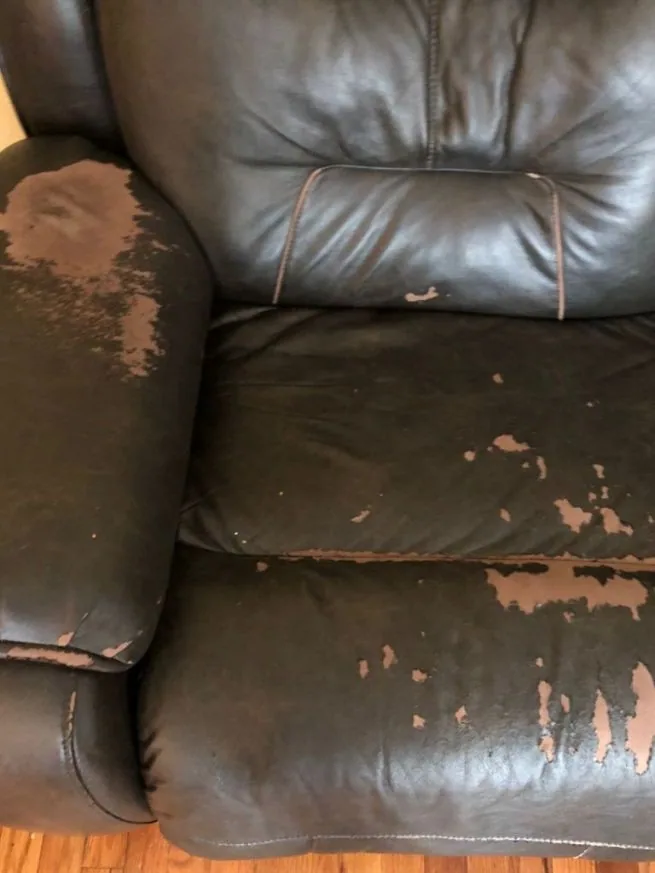
The Material Problem Behind Bonded Leather Peeling
Bonded leather differs from top-grain or full-grain leather. It is made from leather fibers or scraps bonded to a backing and finished with thin, embossed polyurethane.
That coating is the weak point. Body oils, UV exposure, friction, humidity, and age reduce flexibility until the surface separates from the backing. Once delamination starts, peeling often spreads.
Real leather can be cleaned, repaired, recolored, and protected because the hide remains intact. Bonded leather acts more like a coated textile, so leather furniture repair methods are limited.
Bonded Leather Peeling Repair: When It Works — And When It Does Not
Small peeling areas can sometimes be improved with preparation, flexible compounds, color matching, and protective coatings. This works when damage is localized and the backing is stable.
Vinyl furniture repair and faux leather sofa restoration can also work for limited cuts, scuffs, seam wear, or isolated coating loss. A technician can often blend damage better than a leather couch repair kit.
Failing bonded leather cannot be permanently turned into full-grain leather. Leather furniture dyeing helps faded real leather and may support leather sofa restoration, but it will not stop widespread bonded-surface peeling.
If the coating is breaking down everywhere, furniture upholstery repair, custom furniture reupholstery, or replacement may be more realistic. Many homeowners search for furniture repair, cushions reshape near me after a sofa begins peeling; inspection determines whether repair is sensible.
Cost Analysis: Repair, Reupholstery, or Replacement
Costs depend on size, material, damage, cushion condition, and whether work is in-shop or on-site. The best choice is not always the cheapest if the surface will keep failing.
Option | Best For | Limitation |
Surface repair / patching | Small peeling spots, scuffs, or scratches | Poor fit for active delamination |
Professional cleaning and recoloring | Faded or soiled real leather | Cannot rebuild failing bonded coating |
Custom furniture reupholstery | Strong frames, good cushions, or sentimental pieces | Higher investment and material-dependent |
Buying a new sofa | Weak frames, flat foam, or widespread peeling | New furniture may use similar coatings |
For a well-built frame with supportive cushions, home furniture restoration can preserve a better piece than buying a lower-grade replacement. If joints are loose and foam is flat, replacement may be smarter.
What Professional Repair Usually Includes
Professional leather cleaning and repair starts with inspection. A technician identifies the surface—bonded leather, vinyl, faux leather, corrected-grain leather, or another coated material—before recommending treatment.
Work may include cleaning, degreasing, sanding loose coating, edge stabilization, flexible filler, color matching, pigment or dye, and a protective topcoat. Punctures, tears, or large worn areas may need patching or panel replacement.
Some mobile leather furniture repair services can handle cleaning, color touch-ups, small vinyl repairs, and localized surface work at the home. Panel replacement, sewing, cushion rebuilding, or full reupholstery usually belongs in a workshop.
Bonded leather peeling repair is worth considering when the damage is localized and the frame and cushions are still strong. Full replacement may be smarter when the entire surface is delaminating, the foam has collapsed, or the frame is weak. Before discarding the piece, homeowners in Austin can contact Lerega at (737) 288-5195 for professional furniture restoration services, an honest assessment, and practical repair options based on the material.