
Why Leather Sofa Cushions Sag: When Reshaping Or Foam Replacement Can Save The Furniture
A leather sofa can look worn even when the leather itself is still in good condition. Seat cushions flatten, corners collapse, back cushions lose their shape, and the leather begins to wrinkle or fold because the support underneath is no longer doing its job.
For homeowners in San Antonio, TX, sagging leather furniture does not always mean the sofa needs new upholstery. In many cases, the problem is inside the cushion: compressed foam, displaced filling, weakened support, or a cushion insert that has simply lost its original shape.
Correcting the cushion first can improve comfort, appearance, and the way the leather sits on the furniture.
Why Leather Sofa Cushions Lose Their Shape
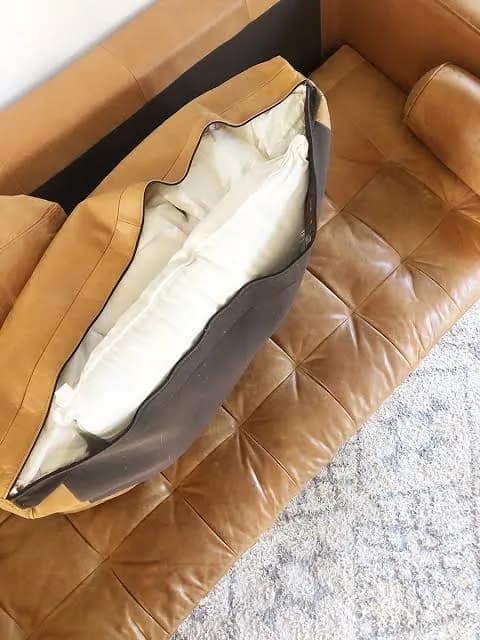
Cushions are designed to compress when someone sits down and recover afterward. Over time, repeated pressure changes the internal materials.
Foam gradually loses resilience. Fiber filling shifts toward the edges. Down or feather blends can flatten unevenly. In attached cushions, internal support may move or collapse where the seat receives the most use.
As the cushion becomes softer and lower, the leather covering no longer remains properly tensioned.
This can create:
- Deep seat impressions
- Wrinkled leather
- Collapsed front edges
- Rounded or uneven cushion corners
- Gaps between cushions
- Excessive folding when someone sits down
- Seats that feel noticeably lower than neighboring cushions
These symptoms are often blamed on stretched leather, but the upholstery may only be reacting to a cushion that has changed shape underneath it.
Cushion Reshaping vs. Foam Replacement
Not every sagging cushion requires completely new foam.
Cushion reshaping may be appropriate when the existing insert still has usable support but has shifted, flattened unevenly, or lost definition around the edges.
A technician may rebuild the cushion profile by redistributing filling, adding support materials, correcting the shape, or restoring the original crown of the seat.
Foam replacement becomes more appropriate when the existing foam remains permanently compressed or no longer rebounds after pressure is removed.
New foam can restore seat height and firmness while helping the leather cover return to a more natural position.
The correct solution depends on cushion construction, age, desired firmness, and how much the existing material has deteriorated.
Why Sagging Cushions Can Damage Leather
A weak cushion does more than make a sofa uncomfortable.
When the cushion underneath collapses, the leather repeatedly folds into the same areas. Those folds experience more friction and flexing every time the furniture is used.
Over time, this can contribute to:
- Finish wear
- Permanent creasing
- Surface cracking
- Stretching
- Color loss on raised folds
- Premature failure along high-pressure areas
This is why treating only the visible leather may not solve the problem.
If a worn seat is recolored while the cushion remains collapsed, the leather will continue moving in the same way and the repaired surface may wear again.
For some furniture, leather sofa cushion repair is therefore part of protecting the upholstery rather than simply improving comfort.
Attached Cushions and Removable Cushions Require Different Work
Cushion construction matters.
Removable seat cushions can usually be opened and rebuilt separately from the sofa. Existing foam can be measured, evaluated, and replaced or modified while the leather cover is retained when it remains in good condition.
Attached cushions are more complicated because the upholstery may need to be partially opened to access the internal materials.
Back cushions may contain loose fiber, foam, feathers, or combinations of several materials. When filling settles toward the bottom, the upper portion of the back can appear empty while the lower section becomes overstuffed.
Restoring these cushions may involve redistributing or replacing filling rather than installing conventional seat foam.
A professional furniture cushion repair assessment should therefore identify how the cushion was originally constructed before deciding how to rebuild it.
Does Wrinkled Leather Mean the Leather Is Stretched?
Not always.
Leather naturally develops some movement and character with use. A small amount of wrinkling is normal, particularly on soft seating.
More severe folds can have several causes:
- Foam compression
- Oversized leather covers
- Natural stretching of the hide
- Poor cushion support
- Internal filling migration
- Repeated use in the same seating position
If the cushion has lost height, rebuilding the insert may reduce a significant amount of visible wrinkling.
However, leather that has permanently stretched may not return completely to its original appearance simply because new foam is installed.
A proper evaluation should separate cushion failure from permanent upholstery deformation.
When Cushion Repair Is Worth Considering
Cushion restoration can make sense when the frame and upholstery remain serviceable but the seating has become uncomfortable or uneven.
| Problem | Possible Solution | Main Consideration |
|---|---|---|
| Slightly flattened seat | Cushion reshaping | Existing foam must still have usable resilience |
| Deep permanent sagging | Foam replacement | New firmness should suit the furniture design |
| Uneven cushion corners | Reshaping or added support | Leather cover must still fit correctly |
| Collapsed back cushion | Filling replacement or redistribution | Construction varies widely by manufacturer |
| Wrinkled leather over soft seat | Cushion rebuilding | Leather may also have permanent stretching |
| One seat lower than others | Individual cushion repair | Matching height and firmness is important |
Repairing the cushion can be especially worthwhile when only one or two seats have deteriorated while the rest of the sectional or sofa remains comfortable.
Choosing the Right Foam for Leather Furniture
Replacing foam is not simply a matter of cutting a block to size.
Density, firmness, thickness, cushion shape, and surrounding upholstery all influence the finished result.
Foam that is too soft may quickly recreate the original sagging problem. Foam that is too firm can make the furniture uncomfortable and place excessive tension on the leather cover.
The replacement should also account for the original cushion profile. Some seats are flat, while others are crowned, wrapped in batting, or shaped to create softer edges.
For leather furniture, maintaining the proper relationship between the cushion insert and the leather cover is particularly important because the upholstery shows changes in shape clearly.
Leather Sofa Cushion Repair in San Antonio, TX
Sagging leather furniture does not automatically require complete reupholstery or replacement.
When the leather is still usable but the seat has become flat, uneven, or uncomfortable, cushion reshaping or foam replacement may restore much of the furniture's original appearance and support.
A professional assessment can determine whether the problem comes from compressed foam, displaced filling, stretched upholstery, damaged support, or a combination of several issues.
Before replacing a leather sofa, sectional, recliner, or chair, San Antonio, TX homeowners can have the cushions evaluated to determine whether reshaping, foam replacement, filling restoration, or additional upholstery work is appropriate.
Contact Lerega for leather sofa cushion repair, cushion reshaping, foam replacement, and furniture restoration services in the San Antonio area.