
Mail-In Motorcycle Seat Reupholstery For Touring Bikes
A split seam, cracked cover, or flattened rider section can spoil the appearance and feel of an otherwise well-kept touring motorcycle. Worn upholstery does not always mean you need a complete replacement seat.
If the seat base remains sound, motorcycle seat reupholstery can renew the covering while preserving the foundation that fits your bike. Depending on its condition, the project may also include foam repair, replacement padding, and matching upholstery for the passenger seat or backrests.
For a removable seat, the work can often be arranged by mail. You send the approved seat assembly to the workshop while the motorcycle stays at home.
Lerega welcomes requests from across the United States for mail-in evaluation of touring motorcycle seats. Send photos first so the construction, proposed work, and shipping arrangements can be reviewed before you send anything. Lerega also takes leather saddle seat repair projects by mail.
Why Reupholster a Touring Motorcycle Seat?
Replacing a seat means choosing an entire assembly: its base, shape, padding, covering, and relationship to the rider and passenger. That can be worthwhile when you want a fundamentally different seat, but it may be unnecessary when the main problem is worn upholstery.
Recovering your existing seat is worth considering when:
you already like its position and overall shape;
the base and mounting points are in usable condition;
the cover is torn, faded, cracked, or worn through;
the rider section needs attention while other components remain sound;
you want the seat and backrests to share a consistent finish;
a suitable replacement is difficult to find for your particular model and year.
A complete replacement also deserves consideration if the base is damaged or the existing seat cannot support the changes you want. The useful comparison is between the full repair proposal and a suitable replacement, including shipping and any additional parts.
Which Motorcycle Seat Parts Can Be Sent by Mail?
The most useful starting point is usually the complete removable seat: its base, existing foam, and fitted cover. Keeping those components together allows the workshop to assess how the upholstery is shaped and attached.
Depending on the motorcycle and the agreed project, a shipment may include:
a rider seat on its original base;
a separate passenger seat;
a one-piece rider and passenger seat;
a removable rider backrest pad;
a passenger backrest pad from a touring trunk;
other removable upholstered pads approved during the assessment.
Send photos of the assembled seating area before removing parts. This is especially useful when the project includes several pieces that need to match.
Confirm exactly which components are needed before packing. A padded backrest may be removable without sending the entire trunk or its mounting structure.
Does Your Seat Need Repair, Recovering, or Foam Restoration?
Motorcycle seat recovering replaces the fitted outer cover. A repair may address a smaller defect, while foam restoration deals with the support underneath. The condition of each layer determines the useful scope of work.
| Seat condition | Work to consider |
|---|---|
| Localized finish wear on otherwise sound leather | Assessment for surface restoration |
| An open seam with strong material on both sides | Seam repair, subject to access and construction |
| A torn or deteriorated panel with usable surrounding upholstery | Panel replacement |
| Widespread cracking, peeling, or brittle covering | Replacement of the affected covering or complete recovering |
| Flattened, uneven, torn, or deteriorated padding | Foam repair or replacement alongside upholstery work |
| A cracked base or damaged mounting points | Assessment of the base before investing in upholstery |
A new cover does not correct damaged foam underneath it. Likewise, stitching through weakened material may leave the area vulnerable to another tear.
Our guide to repairing versus reupholstering vehicle seats explains how material condition affects the choice between restoration and replacement.
When Does Motorcycle Seat Foam Need Attention?
Motorcycle seat foam repair becomes relevant when the shape or support has changed, even if the cover still looks reasonably good.
Mention any section that feels unusually low, uneven, or different from the rest of the seat. Also report previous foam modifications, persistent moisture, or damage that extends below the cover. Photographs help with an initial assessment, but the condition of concealed padding may only become clear when the upholstery is removed.
The objective should be agreed before work starts. Restoring a worn area to its previous profile is different from changing the rider pocket, seat height, or position on the motorcycle.
If you already like the way the seat fits, say so. That gives the project a clear starting point: retain the preferred shape while addressing deterioration.
If you want a different riding position, discuss that separately. Changes to the seat profile need to be considered in relation to the motorcycle and rider; a new covering alone is not an ergonomic redesign.
Leather or Vinyl: Which Material Fits Your Riding?
Material selection should reflect how the motorcycle is used and stored, as well as the appearance you want.
Vinyl for Outdoor Use
A suitable motorcycle or outdoor upholstery vinyl can be a practical choice for a touring seat. When reviewing materials, consider their intended application, resistance to sunlight and abrasion, flexibility, texture, and cleaning requirements.
Our guide to vinyl, PU, and other faux leather materials explains why similar-looking synthetic coverings can perform differently.
Two black vinyls can look similar in a small photograph while differing in grain, sheen, and feel. Those differences become more noticeable when a newly covered rider seat sits beside an older passenger pad.
Leather Upholstery
Leather offers a different surface character and can suit a traditional touring-bike appearance. The particular leather and finish should be selected for the intended use, with attention to exposure and ongoing care.
A leather seating panel with vinyl sides may also be worth discussing. The combination, color, and seam layout should be agreed as part of the upholstery design.
Seams and Rain Exposure
Water-resistant covering does not automatically make a stitched seat waterproof. Seams, decorative stitching, and the construction beneath the cover affect how moisture is managed.
Tell the workshop if the motorcycle regularly stays outside or is used in wet weather. That information should guide the material and construction choices, along with any recommendation for a rain cover.
Custom Upholstery for Seats and Backrests
Custom motorcycle seat upholstery can be subtle. A consistent grain, carefully chosen thread, and coordinated backrests may provide all the change a touring bike needs.
Details to discuss include the color, surface texture, panel layout, contrast stitching, and piping. Bring reference photos and identify the features you like in each one. A picture may communicate the preferred seam pattern more clearly than a general request for a custom look.
For a rider seat, passenger seat, and backrest set, review the design together. A fresh black cover can stand out against older black upholstery because of differences in fading, texture, or gloss.
If only one piece needs work, send clear pictures of the pieces that will remain. The aim may be a close visual match or an intentional contrast; that decision belongs in the initial design discussion.
Harley-Davidson, Gold Wing, BMW, and Indian Touring Seats
Whether your project involves a Harley-Davidson Road Glide or Street Glide, a Honda Gold Wing, a BMW touring motorcycle, or an Indian Roadmaster or Challenger, include the exact model year and identify the seat manufacturer.
Explain whether the seat is factory equipment or an aftermarket replacement, which rider and passenger pieces need work, and whether heating or cooling is fitted. Photos of the full seating arrangement and the underside help show how the parts fit together.
Suitability for mail-in work depends on the individual seat, its condition, and the requested changes.
What About Heated or Cooled Seats?
Tell Lerega about heating or cooling features before approving upholstery work. Include photographs of the underside, connectors, and any labels, and state whether the system currently works.
These features can involve components within the seat that affect how the cover and padding can be handled. Their compatibility with the proposed work needs to be reviewed for the particular assembly.
Report any existing electrical problems so the scope of the upholstery work can be defined correctly.
How Mail-In Motorcycle Seat Repair Works
1. Send Photos and Project Details
Start with a full view of the seat, close-ups of the damage, and photos of its underside. Add the motorcycle's make, model, year, your ZIP code, and any details about previous repairs or modifications.
Explain the result you want: repair a damaged section, replace the covering, address worn padding, or coordinate several upholstered pieces.
2. Agree on the Scope and Shipping Arrangements
Lerega reviews the request to determine whether the seat is suitable for the proposed mail-in work. Discuss the material, design, foam work, included pieces, estimate, and expected schedule.
Confirm shipping costs and the correct destination before sending the seat. If inspection reveals concealed damage, any additional work should be discussed and approved before it proceeds.
3. Send the Complete Approved Assembly
Unless instructed otherwise, keep the old cover and foam attached to the base. They provide useful information about the original construction and fit.
Follow the motorcycle manufacturer's removal instructions or arrange removal through a qualified shop. Keep wiring and connectors intact, and confirm which loose hardware should accompany the seat.
4. Protect the Seat in Transit
Use a sturdy box with cushioning that prevents the assembly from moving. Protect projecting brackets and connectors, and separate additional pads so they cannot rub against each other.
Pack the seat dry. Include your contact details and project reference inside the box, and keep photographs of the seat and packaging before shipment.
5. Arrange Return and Reinstallation
The approved upholstery work is completed and the seat is prepared for return. Reinstall the assembly according to the manufacturer's instructions, checking the attachment and any applicable connections before use.
What Affects Motorcycle Seat Reupholstery Cost?
The amount of new material is only one part of the price. Access, pattern work, construction, and the condition beneath the cover can make two similarly sized seats very different projects.
The main cost factors include:
the size and number of pieces;
full recovering versus replacement of selected panels;
material choice and availability;
foam repair, replacement, or agreed reshaping;
the complexity of seams, piping, and decorative details;
existing modifications and integrated features;
packing and shipping in both directions.
Replacing a straightforward cover over sound padding is a different scope from rebuilding deteriorated foam and upholstering an entire rider, passenger, and backrest set.
Lerega provides an individual estimate after reviewing the project. Include all the pieces you are considering so the proposal reflects the complete job.
When Should You Schedule the Work?
Plan around the period when you can be without the seat. The total time includes shipment to the workshop, the agreed work schedule, and return transit.
If you have a trip planned, mention the departure date with the initial request and confirm timing before shipping. Material selection and additional work discovered during inspection can affect the schedule.
Sending photos early lets you discuss the project while the seat is still on the motorcycle.
Request a Motorcycle Seat Reupholstery Quote from Lerega
Lerega works with leather, vinyl, seat padding, and custom upholstery as part of its automotive upholstery services in Austin.
For a touring motorcycle seat, start with a photo assessment. Show the full assembly, the damage, the underside, and any passenger seat or backrest you would like included. Add the make, model, year, and your ZIP code.
Whether you want to preserve a familiar seat or discuss a coordinated new finish, those details help define the work and confirm whether mail-in service is suitable.
Send Photos for a Seat Upholstery Quote
You can also email your photos and project details to craft@lerega.com.
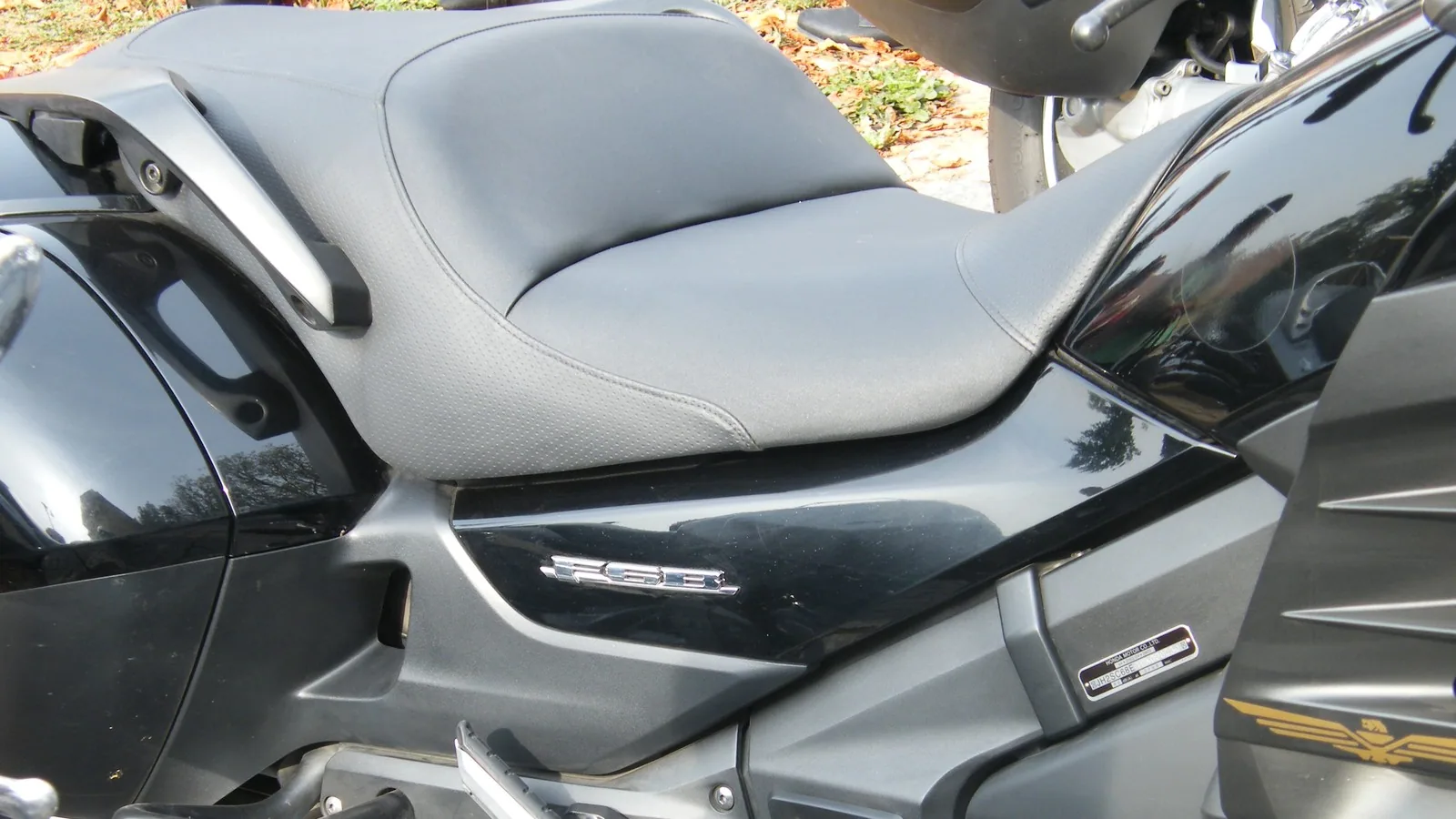
Cover photo: Honda Goldwing 1800 F6B detail by Addvisor / Wikimedia Commons, CC BY-SA 4.0. Cropped, resized, and converted to WebP.