
Mail-In Boat Upholstery, Canvas And Clear Vinyl Window Repair
Mail-in boat upholstery repair lets you renew removable cushions, covers and enclosure panels while your boat stays at its dock or in storage.
A project might involve a complete set of yacht cushions, replacement boat cushion covers made from existing covers, or new clear vinyl windows sewn into an otherwise usable enclosure.
Lerega provides mail-in repair and reupholstery for suitable removable boat and yacht cushions, canvas and clear vinyl enclosure panels across the United States. Send photos to discuss the work, get an estimate and confirm which pieces to ship.
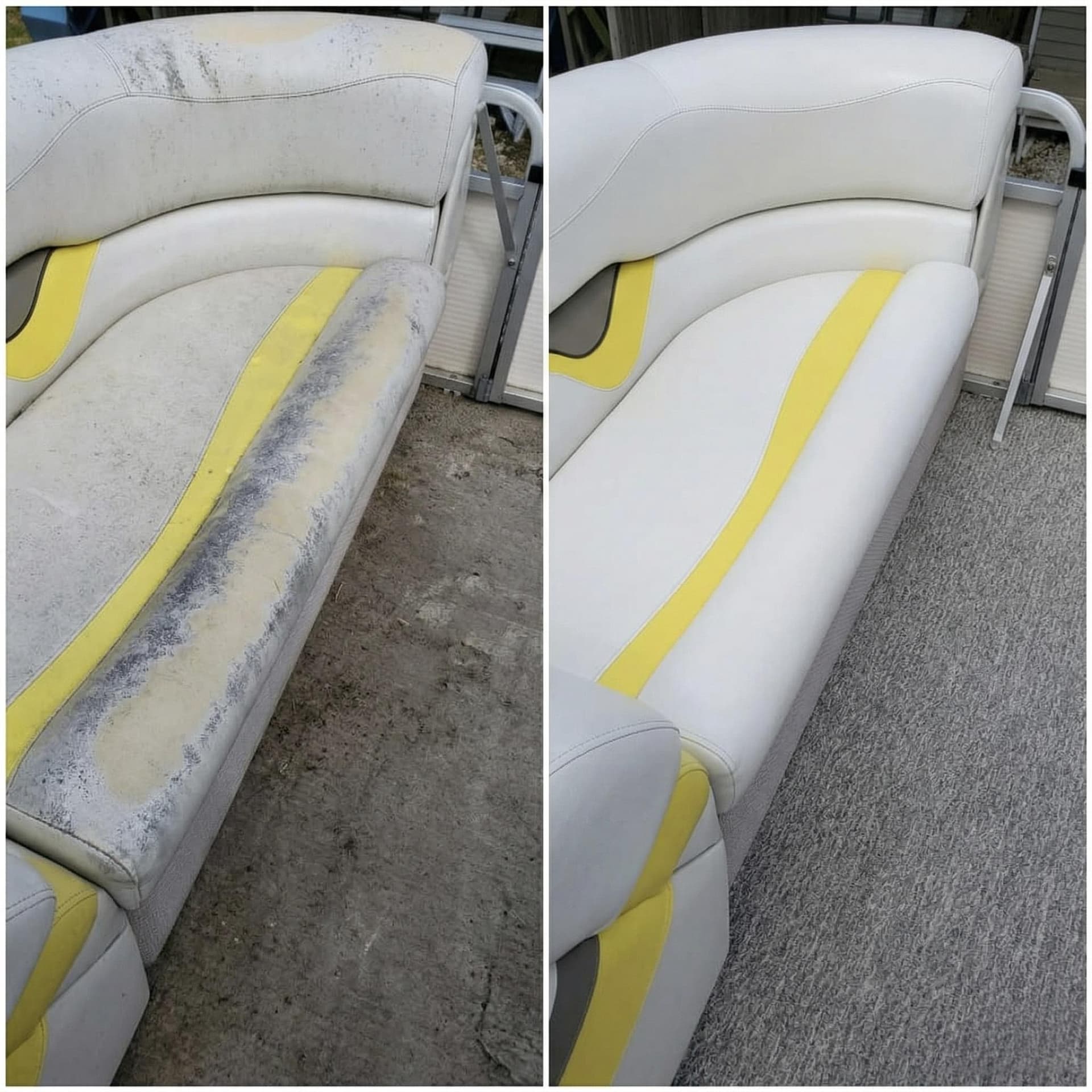
What Boat Upholstery and Canvas Can Be Shipped for Repair?
The most practical projects involve parts that can be removed and packed without transporting the boat. Depending on the work, the shipment may contain complete cushions, the existing covers, or individual canvas panels.
| Item | What to Send | Repair Options |
|---|---|---|
| Cockpit cushions and yacht seating | Complete cushions or intact removable covers | New upholstery, piping, zippers and foam work |
| Sun pads and removable bolsters | The removable assembly or an approved cover set | Panel replacement, reupholstery and padding restoration |
| Cabin and berth cushions | Covers, complete cushions or confirmed patterns | Replacement covers and cushion rebuilding |
| Bimini tops and boat covers | Existing canvas with its seams and attachment details intact | Restitching, fabric repairs, zipper replacement or reproduction |
| Clear window enclosure panels | The complete affected panel and any requested adjoining pieces | Clear vinyl replacement, edge repairs and zipper work |
Include connected panels and matching cushion sets in the same request. Their relationship on the boat can be just as important as each piece's individual dimensions.
Have a cushion set, cover or enclosure panel that needs attention? Send photos for a marine repair quote.
Can You Make Replacement Boat Cushion Covers From Old Covers?
An intact old cover can provide useful information about the cushion's shape, seam positions, zipper opening, piping and attachment points. For suitable projects, it can serve as the starting pattern for a replacement.
If your existing foam remains comfortable and holds its shape, sending only the covers may reduce the size of the shipment. This approach needs to be agreed upon first: some fitted cushions require the complete cushion or additional measurements to establish the correct shape.
Before removing anything, photograph the cushions in place. Include the full seating arrangement and the edges where neighboring cushions meet.
Keep the old covers assembled. Cutting them into separate pieces can remove information needed to understand how they fit. Identify each cover by location, especially when similar-looking cushions have different curves or dimensions.
A stretched, shrunken or incomplete cover may need supporting measurements or a new pattern. Reproducing its current shape exactly could also reproduce its fit problems.
Our guide to sun damage and cracked boat-seat vinyl explains signs that the upholstery itself may need replacement.
When Should You Send the Whole Cushion?
The whole cushion may be needed when the foam, padding or backing also requires work.
Tell Lerega if a cushion has lost support, developed uneven areas, retained moisture, or has a damaged underside. Photographs of the top alone may not show the work required.
Our guide to musty odors and deteriorated boat-seat foam explains why a cushion may need more than a new outer cover.
Boat cushion reupholstery can involve retaining sound foam, replacing selected padding, or rebuilding the cushion before fitting new material. The appropriate construction depends on where the cushion is used and how it is exposed to water.
Choosing Materials for Marine Upholstery
Tell Lerega whether your cushions stay inside the cabin, sit under cover or are regularly exposed to sun and spray, so the replacement upholstery, thread and foam can be selected for the way you use the boat.
For coastal boats, our guide to saltwater damage to marine upholstery explains why the cover, seams and cushion core should be considered together.
For a coordinated set of cockpit cushions, sun pads or yacht seating, material selection also needs to account for color, texture, seam layout and piping. Reviewing the full set helps establish which pieces should be restored together and which can remain in service.
What Can Boat Canvas Repair Address?
A loose seam, broken zipper or damaged edge can make a cover difficult to use even when much of the fabric remains serviceable.
Boat canvas repair may include:
- Restitching seams where the surrounding fabric still holds stitches.
- Replacing damaged zippers and worn edge binding.
- Repairing localized tears and reinforcing suitable areas.
- Replacing damaged snaps or other fabric-mounted fasteners.
- Reproducing an existing cover from a usable original.
For bimini top repair, cockpit cover repair and mooring covers, the condition of the surrounding fabric matters. A new seam needs a sound foundation; widespread deterioration may make replacement more practical.
Photographs should show the canvas installed on the boat whenever possible. They reveal how it sits on the frame, where it attaches and whether it is already pulling out of position.
If the existing cover fits poorly, describe the problem before requesting a replacement. The goal is to agree on the intended fit before the old canvas becomes the pattern.
Can Clear Vinyl Boat Windows Be Replaced Separately?
Clear vinyl boat window replacement can be an option when the transparent section has failed but the canvas border and surrounding construction remain usable.
These flexible windows are often called isinglass, sometimes spelled eisenglass. They appear in cockpit enclosures, side curtains, aft curtains and sailboat dodgers.
Cracks, splits and lasting visibility problems call for an assessment of the window material. Replacing the clear section may allow the existing panel to stay in service without rebuilding the whole enclosure.
For a mail-in window replacement, the complete enclosure panel is usually needed. Keep the old window attached unless instructed otherwise; its position helps preserve information about the panel's shape.
If the panel zips to a neighboring section, include photographs of that connection. The adjoining piece may also be needed to assess zipper alignment and compatibility.
Replacement material should be selected for the panel's application, visibility requirements, flexibility and handling. Flexible vinyl and rigid window materials require different approaches.
Can a New Cover or Enclosure Be Made Without the Boat?
A usable original can provide the starting pattern for a replacement cover. Photographs of it fitted on the boat, confirmed measurements and attachment details help establish the intended fit.
A new enclosure, modified frame or major design change may require on-boat measurements, physical templates and final fitting. The boat's make and model alone do not establish a custom enclosure's shape. Send photos of the existing setup so Lerega can confirm what the project requires.
How Does Mail-In Marine Upholstery Repair Work?
1. Send Photos and Describe the Project
Show the complete item on the boat and the damaged areas. Include the number of pieces and your ZIP code; the checklist below covers the details needed for a quote.
2. Agree on the Work and What to Ship
Confirm the repair approach, materials, estimate and which components need to be sent. Use the shipping address and packing instructions provided for your project.
Concealed foam or backing damage may require inspection after arrival. Any resulting changes to the work need to be agreed upon before proceeding.
3. Label and Pack Your Items
Use a simple label for each piece, such as “port cockpit seat” or “aft center cushion,” and include a matching inventory.
Items should be dry before packing. Protect corners, zippers and fasteners so they cannot rub against adjacent pieces during transit.
Clear window panels require packaging suited to their specific material. Keep hardware away from transparent surfaces, avoid sharp folds, and confirm whether the panels need to remain flat or can be rolled. Follow the agreed packing instructions.
4. Receive the Finished Components
Lerega completes the agreed repairs or replacement upholstery and prepares the finished components for return shipping. Reinstallation and any final fitting requirements are discussed as part of the project.
What Affects the Cost of Mail-In Boat Upholstery Repair?
The estimate depends on the number and size of the pieces, their condition, the chosen materials and the sewing involved.
Shaped cushions, multiple colors, piping, curved window panels and complex zipper connections can require more work than simple flat pieces. Foam replacement and repairs to a cushion's backing also affect the scope.
Shipping should be considered alongside the work itself. Sending only approved old covers may keep a shipment compact; complete cushions and large window panels need different packing arrangements.
For a matching set, ask for the complete project to be assessed together. This helps compare targeted repairs with replacing several related pieces and makes the material choices clearer.
Get a Quote for Mail-In Boat Upholstery and Canvas Repair
If your boat or yacht has worn cushions, damaged canvas or deteriorated clear window panels, start with photographs of the parts you want repaired.
For a useful initial assessment, send:
- An overall photo of the seating, cover or enclosure installed on the boat.
- Close-ups of damage, seams, zippers and fasteners.
- The boat's make, model and year, if known.
- The number of pieces and approximate dimensions.
- Your ZIP code, preferred timing and any requested changes.
Lerega will review whether the project can be handled by mail and what should be included in the shipment.
Local owners can also explore Lerega's boat upholstery services in Austin.