
Leather Car Seat Cigarette Burn Repair & Scratch Fix Options
Can Cigarette Burns, Scratches, and Peeling Leather Be Fixed in a Car Seat?
Many cigarette burns, scratches, scuffs, peeling finishes, and small tears can be repaired without replacing the entire seat cover.
The correct repair depends on the depth of the damage, the type of material, the condition of the surrounding upholstery, and whether the foam or seat structure underneath has also been affected.
Some defects are limited to the color coating or protective topcoat. Others extend through the leather or vinyl into the backing, foam, seam, or cushion structure. A professional evaluation helps determine whether the seat needs targeted repair, refinishing, panel replacement, or complete reupholstery.
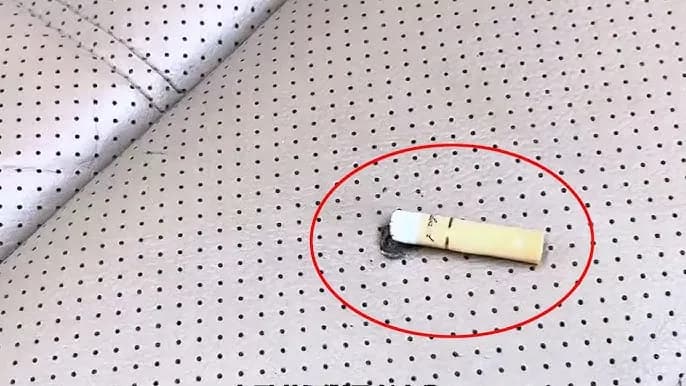
Why Car Seat Damage Often Looks Worse Than It Is
Most automotive leather has a colored finish and protective topcoat applied over the surface. When that finish becomes scratched, faded, worn, or partially separated, the seat may appear severely damaged even though the underlying material remains flexible and structurally sound.
Common causes of surface damage include:
Friction from entering and exiting the vehicle
UV exposure and heat
Pet claws
Keys and clothing hardware
Cargo and child-seat contact
Body oils and perspiration
Improper cleaning products
Previous low-quality repairs
A technician evaluates the material type, leather flexibility, grain condition, stitching, foam support, previous coatings, and color-match requirements before recommending a vehicle leather seat repair.
Can Cigarette Burns in Leather Car Seats Be Repaired?
Small cigarette burns can often be repaired when the damage is limited to the surface or a small puncture.
Leather car seat cigarette burn repair may include:
Removing hardened or charred edges
Reinforcing the damaged area from underneath
Rebuilding missing material with a flexible repair compound
Reproducing the surrounding grain texture
Matching the original color
Applying a compatible protective finish
The goal is to stabilize the damage and visually blend the repair with the surrounding seat.
The final result depends heavily on the location and size of the burn. A small burn in a smooth, stable panel is generally easier to correct than a hole in perforated leather, directly beside a seam, or on a heavily stretched driver-side bolster.
When a Cigarette Burn May Require Panel Replacement
Panel replacement may provide a more durable and visually consistent result when:
The hole is large
A significant amount of material is missing
Foam is exposed or burned
The surrounding leather has become brittle
The burn crosses a seam
The affected area experiences heavy stretching
Perforation cannot be reconstructed convincingly
Previous repairs have enlarged or hardened the damage
Repairing the surface alone is not enough when the material beneath it has lost its strength.
In those situations, the damaged upholstery panel can often be replaced without reupholstering the entire seat.
Heated, Ventilated, and Perforated Seats Require Extra Care
Modern seats may contain heating elements, ventilation channels, occupancy sensors, airbags, electrical wiring, and complex foam systems.
A cigarette burn or puncture in one of these seats must be evaluated carefully before repair.
Excessive filler can block perforations or reduce airflow. Deep cutting or reinforcement may affect nearby heating elements or wiring. A repair close to an airbag seam should not interfere with the original construction or deployment path.
When perforated leather is extensively damaged, replacing the complete insert may produce a cleaner result than attempting to recreate individual holes through a repaired area.
How Leather Seat Scratches and Scuffs Are Repaired
Car leather seat scratch repair is often possible when the damage has not cut deeply through the material.
Light scratches may affect only the protective coating or color finish. Repair may involve cleaning the area, stabilizing raised fibers, restoring the color, and applying a new topcoat.
Deeper claw marks, cuts, or abrasions may require:
Smoothing damaged fibers
Flexible filling
Grain reproduction
Color matching
Refinishing
Protective coating
Pet scratches, key marks, and cargo scuffs can look severe because they expose a contrasting layer underneath the original color. When the base material remains strong, these marks can often be blended without replacing the seat cover.
Can Deep Scratches Be Made Completely Invisible?
Not every scratch can be removed without leaving any trace.
The achievable result depends on:
Scratch depth
Amount of missing material
Grain pattern
Seat color
Location
Leather flexibility
Existing wear
Lighting
Whether the damage crosses perforations or stitching
A shallow scratch may disappear almost completely after refinishing. A deep cut that has removed grain or stretched the leather may remain slightly visible even after professional repair.
A responsible technician should explain the expected improvement before starting the work.
What Causes Peeling Leather Car Seats?
The correct peeling leather car seat fix depends on what is actually separating.
Several different problems are commonly described as “peeling leather”:
Failing Color or Protective Finish
The leather underneath may remain intact while the pigmented finish or clear topcoat begins to wear or separate.
This may be repairable through removal of unstable coating, surface preparation, color restoration, and application of a new protective finish.
Vinyl Delamination
Many vehicle seats use genuine leather on the primary contact surfaces and vinyl on the sides, backs, or lower panels.
When vinyl begins separating from its fabric backing, the material itself is failing. Refinishing may improve a very small localized defect, but widespread delamination usually returns because the separation continues underneath the repair.
Panel replacement is generally the more durable solution.
Bonded or Synthetic Material Failure
Bonded and synthetic materials may peel across large sections as their upper layer separates from the backing.
This type of failure cannot usually be corrected permanently with filler and color. Replacing the affected upholstery panel or reupholstering the seat is often more practical.
Previous Repair Failure
An earlier repair may begin peeling because of poor preparation, contamination, incompatible products, excessive coating thickness, or continued structural deterioration underneath.
The previous coating must be evaluated and, where possible, removed before a new repair is attempted.
Repair Options by Damage Type
| Damage Type | Possible Repair | When Replacement May Be Better |
|---|---|---|
| Small cigarette burn | Reinforcement, filling, grain repair, color matching, and sealing | Large hole, missing material, or exposed foam |
| Light scratch or scuff | Cleaning, color restoration, and topcoat | Deep cuts across a large area |
| Deep claw marks | Filling, texture reconstruction, and refinishing | Leather is thin, stretched, or structurally weak |
| Peeling finish on genuine leather | Remove unstable coating, refinish, and protect | Leather beneath the finish is brittle or damaged |
| Widespread vinyl peeling | Limited repair may be temporary | Panel replacement is usually more durable |
| Open seam | Restitching when the material remains intact | Leather has torn through the stitch holes |
| Burn in perforated leather | Localized repair in limited cases | Perforated insert is extensively damaged |
| Exposed or burned foam | Foam repair and upholstery work | Large damaged section requires panel replacement |
Can an Open Car Seat Seam Be Repaired?
Car seat seam repair may be possible when the thread has failed but the upholstery material remains strong.
The existing seam can often be reopened and restitched if:
The original stitch holes are intact
The leather or vinyl has not torn away
The surrounding material remains flexible
The seam can be accessed safely
When the material has torn through the stitch line, simply sewing it again may not hold. The area may require reinforcement, repositioning of the seam, or replacement of the damaged panel.
Airbag seams and other safety-related construction require specialized evaluation and should not be treated like ordinary upholstery seams.
Why Driver-Side Bolster Damage Often Returns
The outside bolster of the driver’s seat is one of the highest-stress areas in a vehicle.
It is repeatedly compressed, stretched, and rubbed as the driver enters and exits. If the foam underneath has collapsed, the leather may fold more sharply and continue wearing in the same location.
A surface repair may fail prematurely when the underlying cause is not addressed.
A durable driver-bolster repair may require:
Foam reshaping or rebuilding
Seam repair
Reinforcement
Color restoration
Replacement of the bolster panel
The repair plan should address both the visible damage and the reason it developed.
When Targeted Repair Is Usually Appropriate
Localized repair may be suitable when:
The damage is small
The surrounding material remains flexible
The leather or vinyl has not lost structural strength
Foam damage is limited or absent
Only the color or topcoat has failed
The repair is not directly on a highly stressed seam
The expected result can blend with the surrounding seat
Targeted repair preserves more of the original upholstery and usually requires less work than replacing the complete cover.
When Repair Is Not the Best Answer
Not every damaged seat should be repaired.
Panel replacement or full reupholstery may provide a better long-term result when:
Several areas are peeling
Large amounts of material are missing
Leather has become brittle
Multiple seams have failed
Foam is exposed or collapsed
The seat cover is badly stretched
Previous repairs are cracking throughout the surface
Synthetic material is delaminating
Damage affects several panels
A repair would only disguise continuing structural failure
A cosmetic coating should not be used to hide material that is continuing to break down.
The best recommendation is the one that provides a durable result for daily use, even when that means replacing one damaged panel rather than attempting another temporary repair.
Why Professional Color Matching Matters
A repaired cigarette burn or scratch should blend with the surrounding seat rather than appear as a flat, mismatched patch.
Professional color matching considers:
Base color
Undertone
Gloss level
Grain visibility
Existing fading
Age of the seat
Adjacent panels
Interior lighting
Black, beige, gray, and brown interiors contain many variations. A general color from a repair kit may not match the original finish closely enough.
The repaired area should also remain flexible. Excessive filler or thick coating may look acceptable initially but crack as the seat bends and compresses.
Lease Returns, Trade-Ins, and Vehicle Sales
Small burns, scratches, peeling areas, and open seams can affect how a vehicle is evaluated during a lease return, dealer trade-in, or private sale.
Targeted repair may improve the appearance of the interior without the cost of replacing the entire seat cover.
Before approving the work, consider:
Visibility of the damage
Potential lease charges
Vehicle age and value
Expected repair durability
Cost of panel replacement
Effect on trade-in or resale presentation
Whether surrounding areas also require restoration
A low-cost repair that remains obvious or begins peeling may provide little practical benefit. The objective should be a professional result that is appropriate for the vehicle’s condition and value.
Get the Damage Evaluated Before Replacing the Seat
Do not assume that a cigarette burn, scratch, peeling spot, or open seam automatically requires complete reupholstery.
Many small defects can be repaired. More advanced damage may require replacement of only one panel. Full reupholstery is usually reserved for widespread material failure, multiple damaged sections, major foam problems, or a complete interior redesign.
A professional assessment can determine whether the seat needs:
Cigarette-burn repair
Scratch and scuff restoration
Color refinishing
Seam repair
Vinyl repair
Panel replacement
Foam rebuilding
Partial reupholstery
Complete seat reupholstery
When repair is appropriate, it can improve the appearance, comfort, resale presentation, and overall condition of the vehicle without replacing more of the original interior than necessary.