
Saddle Seat Repair & Leather Replacement By Mail | Lerega
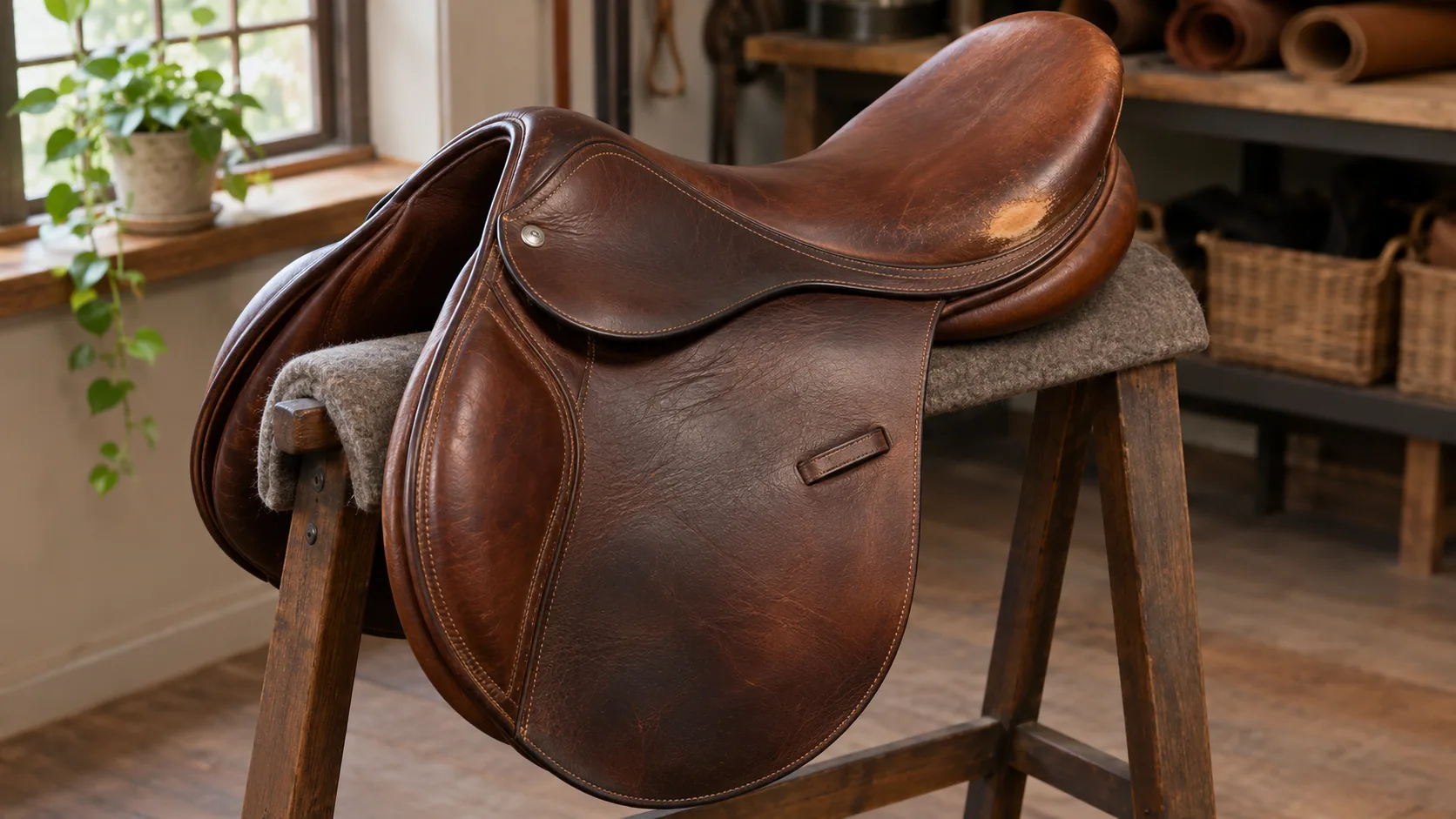
A worn leather seat does not automatically mean a valuable horse saddle needs to be replaced. If the saddle still suits horse and rider, restoring the leather or replacing a damaged seat covering may be worth considering.
The right approach depends on what has worn out. Faded color, a shallow scuff, a split seam, and leather worn completely through require different solutions. The condition of the surrounding leather matters just as much as the visible damage.
For owners exploring leather saddle repair, Lerega offers an initial project review from photographs. Send the saddle’s brand, model, condition, and your ZIP code to discuss suitable repair options and whether the project can be accepted for mail-in service.
REQUEST A SADDLE REPAIR ESTIMATE
Choose Other / Custom to start your request.
When Is a Saddle Worth Restoring?
A familiar saddle can be difficult to replace. You may value its seat shape, leather feel, appearance, or the time spent finding a model that works for you and your horse.
A repair assessment is particularly useful when wear is concentrated in the seat covering and the rest of the saddle remains serviceable. Replacing one deteriorated leather component may allow more of the original saddle to be retained.
Compare the complete repair estimate, including shipping and any separate saddlery work, with the cost and suitability of a replacement. The original purchase price alone does not settle that decision.
If the saddle has known fit or structural problems, address those first. Cosmetic improvement is most useful when the saddle remains a practical choice for continued use.
What Kind of Saddle Leather Damage Can Be Repaired?
Scuffs and Surface Wear
A scuff may affect the leather’s surface without extending through the hide. Where the leather remains sound, careful cleaning and a compatible restoration approach may improve its appearance.
The aim should be appropriate to the saddle’s leather and use. A repair needs to consider how the surface feels as well as how it looks.
Fading and Uneven Color
Uneven color can come from wear, sunlight, cleaning products, or previous treatments. Some discoloration may be improved, but natural variation and established patina can limit how closely an older saddle matches newly replaced leather.
Color restoration should be discussed after the material and any earlier refinishing have been assessed.
Cracked or Worn-Through Seat Leather
Fine surface marks and deep cracks are different problems. When the seat leather has become thin, brittle, or torn through, color correction cannot restore the missing material or its strength.
Saddle seat leather replacement may be more appropriate when the surrounding hide can no longer support a lasting repair.
Open Seat-Cover Seams
An open seam in the seat covering needs assessment of both the thread and the leather around the stitch holes. Re-stitching may be suitable when the leather is still strong. If the holes have stretched or the edge has torn away, replacing the affected leather may be necessary.
Include photographs showing the entire seam, not just the widest part of the opening.
Saddle Seat Restoration or Leather Replacement?
Saddle seat restoration aims to retain the existing leather. It may involve cleaning, conditioning where appropriate, and limited correction of surface wear or color loss.
Seat leather replacement involves removing the deteriorated covering and fitting suitable replacement leather. Depending on the construction, accessing and reattaching that covering can require substantial saddlery work.
Replacement deserves consideration when:
- A tear passes through the seat leather.
- Several cracks extend beyond the surface.
- The leather has worn thin across a larger area.
- A seam has failed because the leather itself has broken.
- A previous cosmetic repair has failed over weakened material.
Replacing the seat covering does not automatically require replacing every leather part of the saddle. The proposed scope should identify exactly which components need attention and which can remain.
English Saddle Repair for Dressage and Jumping Saddles
An English saddle repair inquiry should identify the discipline and model. Dressage, jumping, close-contact, and all-purpose saddles can differ in construction, seat profile, materials, and access to the area requiring work.
Photographs of the complete saddle help put the damage in context. A worn seat edge beside otherwise healthy leather presents a different project from a seat, flaps, and knee rolls that have all deteriorated.
If you are asking about a CWD, Devoucoux, Antares, Voltaire Design, Stübben, or another saddle, include its model and any readable identification markings.
For a Western or other saddle style, send photographs for a separate assessment rather than assuming the same repair method applies.
Why Replacement Leather Needs Careful Matching
Choosing replacement leather involves more than finding the right shade of brown or black.
The assessment should consider:
- Leather type and thickness.
- Grain, texture, and surface feel.
- Flexibility and suitability for the component.
- Color and sheen beside the existing leather.
- The original shape, seam layout, and attachment method.
New leather may look different from surrounding areas that have developed patina through use. Discuss the expected match before approving the work, especially if preserving the saddle’s aged appearance is important to you.
The desired result should also be clear: a localized improvement, a replacement seat covering, or a broader restoration. These are different projects with different material and labor requirements.
How Much Does Saddle Seat Repair Cost?
Saddle seat replacement cost depends on the work needed to remove, remake, and refit the covering. A photograph of a small tear cannot show every part of that process.
The estimate may be affected by:
- The saddle’s design and access to the damaged component.
- Whether the original leather can be retained.
- The amount and type of replacement leather required.
- The condition of adjoining seams and components.
- Previous glue, filler, dye, or repair work.
- Any additional problems discovered during inspection.
- Packing, shipping, and return arrangements.
For a valuable saddle, ask what the quote includes and whether the estimate remains subject to an in-person inspection. A clear scope makes it easier to compare repair with replacement.
Send Lerega photos for an initial review. Pricing and the proposed work are agreed for the individual project.
REQUEST A SADDLE REPAIR ESTIMATE
How Mail-In Saddle Repair Works
Mail-in saddle repair gives owners a way to arrange suitable workshop repairs when a local option is difficult to find. The process should begin before the saddle is packed. Lerega uses the same mail-in process for leather handbag repair.
1. Send Photos and Project Details
Include a full view from each side, a view of the seat from above, and close-ups of the damage. Add the brand, model, approximate age, ZIP code, and a short description of the result you want.
Mention previous repairs or products applied to the damaged area. If you need the saddle for an upcoming competition, include that date with the inquiry.
2. Confirm the Scope and Shipping Arrangements
For projects accepted by Lerega, confirm the proposed work, preliminary estimate, workshop destination, and shipping arrangements before shipping.
Ask about the expected turnaround, shipping charges, tracking, and appropriate coverage for the saddle’s value. These details belong to the individual project.
3. Workshop Inspection and Approval
An in-person inspection can reveal conditions that photographs cannot show. If the findings change the proposed repair, the revised scope and cost should be agreed before additional work begins.
4. Repair and Return Shipping
The agreed work is completed and the saddle is prepared for return shipping. Allow for delivery in both directions, and follow any care or waiting instructions supplied with the completed repair.
How to Pack a Saddle for Shipping
Use the packing instructions confirmed for your project. As a starting point:
- Choose a strong corrugated box with room for protective packing.
- Remove stirrups, stirrup leathers, and loose accessories that are not part of the repair.
- Cushion the saddle and fill empty space so it cannot shift inside the box.
- Include your contact details, repair reference, and a brief description of the agreed work.
Avoid loose packing peanuts. These basic packing practices are also reflected in saddle manufacturer shipping guidance. Handcrafted dressage saddles
Photograph the saddle and its packaging before sealing the box, and keep the tracking information.
Send the complete saddle unless a different arrangement has been agreed. Do not remove an attached seat covering or dismantle the saddle just to reduce the package size.
When a Saddle Needs a Saddler or Fitter First
Leather restoration, structural saddle repair, and saddle fitting address different needs.
Concerns about a damaged tree, deteriorated billets, loose stirrup attachments, or other load-bearing components require a qualified saddler or the manufacturer. Questions about fit, balance, pressure, or discomfort need a suitable saddle-fitting assessment.
A photo estimate for leather work cannot confirm the condition of the whole saddle or its suitability for a particular horse and rider. Tell the repair provider about known concerns before planning cosmetic work. Stubben North America
Saddle Leather Repair FAQ
Can a cracked leather saddle seat be repaired?
It depends on the depth of the damage and the strength of the remaining leather. Limited surface wear may be suitable for restoration. Deep cracks, brittleness, and leather worn through may require replacement of the seat covering.
Can the seat leather be replaced without replacing the entire saddle?
On suitable saddle constructions, it can be a separate repair. Access, attachment methods, and the condition of adjoining parts determine the scope. Send photos before assuming that a seat-only replacement is possible.
Can I send a saddle to Lerega from another state?
Start with a photo inquiry and your ZIP code. Lerega reviews the project and confirms whether it can be accepted, along with shipping arrangements, before you send the saddle.
How long does saddle restoration take?
Timing depends on the agreed work, materials, workshop schedule, and inspection findings. Request a project-specific estimate and allow for transit in both directions, particularly if you have a fixed riding or competition date.
Should I clean, oil, or recolor the damaged area first?
Send photographs before applying new treatments. Follow the saddle manufacturer’s routine care guidance, and mention products already used. Solvent cleaners can discolor and dry leather; adding more products can also make the original condition harder to assess. CWD Sellier
Do I need to send only the seat cover?
Keep the saddle assembled unless the repair provider specifically requests otherwise. The complete item helps the workshop assess the damaged area in relation to the surrounding construction.
Request a Saddle Leather Repair Assessment
If your saddle has a worn seat, damaged leather, uneven color, or an open seat-cover seam, send Lerega clear photographs for an initial review. Include the brand and model, your ZIP code, and what you would like to preserve or improve.
Start with a repair assessment before deciding whether to replace a saddle you want to keep.