
Car Upholstery Repair: Repair Or Reupholster Leather Seats
Repair or Reupholster? How to Decide What Your Damaged Leather Car Seat Really Needs
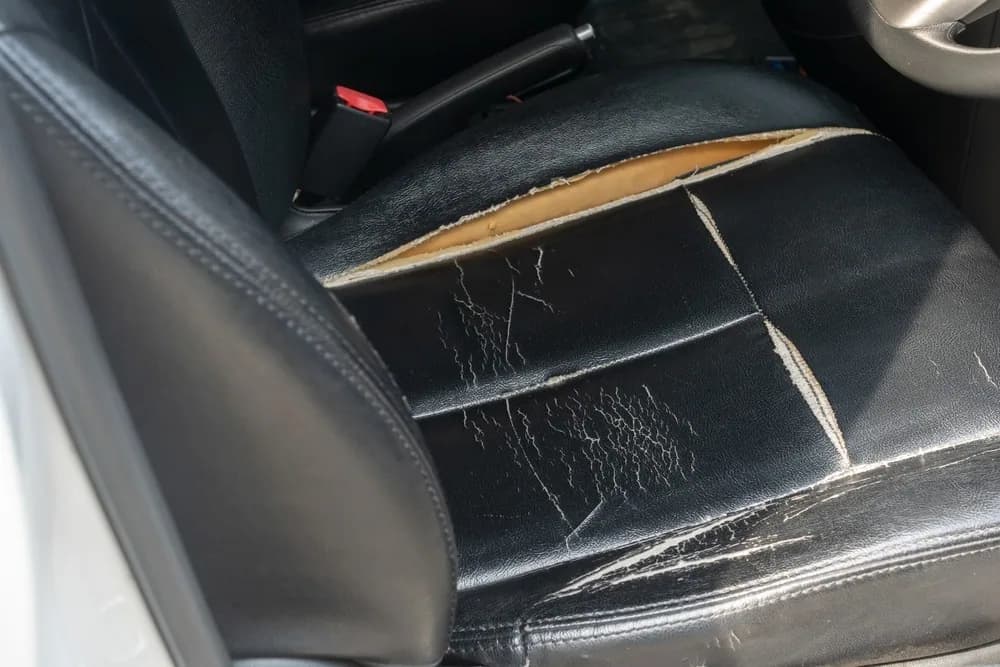
A torn, cracked, faded, or peeling car seat can make the entire interior look neglected. Many vehicle owners assume that the complete seat cover must be replaced, but visible damage does not always require full reupholstery.
Professional car upholstery repair can often correct localized wear while preserving most of the original material. Automotive leather restoration may include cleaning, surface preparation, crack repair, reinforcement, color matching, refinishing, and restoration of the protective topcoat.
When one section is too damaged to restore, replacing an individual panel may be more practical than rebuilding the complete seat. Full reupholstery is generally reserved for widespread deterioration, major foam failure, multiple damaged panels, or a complete interior redesign.
The correct solution depends on whether the damage is cosmetic, structural, or caused by the cushion underneath.
Why Leather Seat Damage Can Look Worse Than It Is
Automotive leather wears in layers. What appears to be severely damaged leather may actually be deterioration of the color finish or protective topcoat.
Common causes include:
Friction from entering and exiting the vehicle
Sunlight and heat exposure
Body oils and perspiration
Clothing hardware
Pets
Improper cleaning products
Repeated stretching and compression
Fading, surface cracks, scratches, and worn bolsters may affect only the finish while the leather underneath remains flexible and structurally sound.
A professional technician evaluates whether the damage is limited to the surface, extends into the leather itself, or originates from collapsed foam beneath the cover. Fixing cracked leather car seats requires a different process from rebuilding a cushion or replacing a badly stretched panel.
When Car Leather Seat Repair Is Usually Enough
Many common problems can be repaired without replacing the complete seat cover.
Surface Cracks and Fading
Light or moderate cracking may be limited to the color and protective finish. When the leather remains strong and flexible, the damaged area can often be prepared, repaired, color matched, and refinished.
Applying new color without proper preparation is not enough. Loose finish, contamination, and unstable material must be addressed first to create a durable result.
Worn Driver-Side Bolsters
The outside bolster of the driver’s seat receives significant friction every time someone enters or exits the vehicle.
Worn leather bolster repair may correct:
Color loss
Surface abrasion
Flattened grain
Light cracking
Worn piping
Minor seam damage
If the leather has become extremely thin, split, or exposed the foam, replacing the bolster panel may be more durable than surface restoration.
Small Tears and Punctures
A limited tear or puncture may sometimes be reinforced, filled, textured, and color matched.
The location of the damage matters. A small tear in a stable area may be repairable, while similar damage beside a seam or in a high-stretch section may continue opening and require panel replacement.
Scratches and Scuffs
Pets, keys, clothing hardware, and daily use can damage the surface finish without cutting through the leather.
Car leather seat scratch repair may involve stabilizing damaged fibers, smoothing the surface, matching the color, and rebuilding the protective coating.
Seam Separation
If the thread has failed but the leather surrounding the stitch line remains strong, the seam may be reopened and properly restitched.
When the leather itself has torn through the stitch holes, sewing the same area again may not hold. Reinforcement or replacement of the affected panel may be necessary.
Localized Vinyl Damage
Many vehicle seats combine leather on the main contact surfaces with vinyl on the sides, backs, or lower panels.
Certain scratches, cuts, and color defects in vinyl may be repaired. However, widespread peeling or delamination usually means the material itself is failing. In those cases, replacing the damaged vinyl panel generally provides a more durable result.
When Panel Replacement Is Better Than Surface Repair
A seat cover is assembled from several individual panels. Damage to one section does not always justify replacing the entire cover.
Panel replacement may be the best option when:
One bolster has torn
Foam is exposed in a localized area
A perforated insert is badly damaged
Leather has become too thin to support a repair
Vinyl is peeling from its backing
One panel has been damaged by a previous repair
The replacement material should be matched as closely as possible in:
Color
Grain
Texture
Thickness
Flexibility
Gloss level
Perforation
Stitching
Piping
Exact matches are not always available, particularly for older or discontinued interiors. In those cases, custom color matching or refinishing adjacent sections may help create a more consistent result.
When Full Reupholstery Makes More Sense
Repair is not always the most practical or durable choice.
Full or substantial reupholstery may be appropriate when:
Large sections of material are missing
Multiple panels are torn or brittle
Several seams have failed
The cover is badly stretched
Foam is exposed across a wide area
Synthetic material is peeling throughout the seat
Previous repairs are cracking or separating
The owner wants a new color, material, or design
The vehicle is undergoing complete interior restoration
In these situations, repeated localized repairs may create an inconsistent appearance and fail to address the overall condition of the seat.
Full reupholstery also provides an opportunity to rebuild the cushion, replace damaged support materials, and reproduce the original seat shape.
Foam Condition Can Determine the Correct Repair
Visible upholstery damage may be caused by deterioration beneath the surface.
Seat foam supports the cover and maintains the shape of the cushion and bolsters. When it collapses, the upholstery may wrinkle, stretch, fold incorrectly, or continue wearing in the same area.
Signs of foam failure include:
A collapsed entry bolster
Uneven seat height
Loose or wrinkled leather
Reduced support
A hard or compressed seating area
Upholstery pulling out of position
Refinishing the leather without correcting damaged foam may improve the color but leave the seat uncomfortable and misshapen. It can also cause the repaired finish to wear prematurely.
Foam may be reshaped, reinforced, supplemented, or replaced depending on its condition.
Heated, Ventilated, and Perforated Seats Require Specialized Work
Modern automotive seats may include:
Heating elements
Ventilation channels
Occupancy sensors
Airbag components
Electrical wiring
Massage systems
Perforated leather
Complex molded foam
These systems must be considered during repair or reupholstery.
Excess filler or coating can block perforations. Incorrect foam may restrict airflow or alter occupant position. Improper disassembly can damage wiring, sensors, or heating components.
When a perforated section is extensively damaged, replacing the complete insert often creates a cleaner result than attempting to reconstruct individual holes.
Repair vs. Reupholstery Comparison
| Seat Condition | Best Option | Typical Reason |
|---|---|---|
| Light cracks or fading | Repair and refinishing | Damage may be limited to the finish |
| Small scratch or scuff | Targeted repair | Original material remains structurally sound |
| Small isolated tear | Repair or panel replacement | Depends on location and material strength |
| Worn entry bolster | Restoration or panel replacement | Damage is usually localized |
| Open seam with intact leather | Seam repair | Existing material may still support new stitching |
| Leather torn through the seam | Reinforcement or panel replacement | Resewing alone may not hold |
| One large torn panel | Panel replacement | Missing or weakened material must be replaced |
| Exposed or collapsed foam | Foam repair and upholstery work | The underlying support issue must be corrected |
| Multiple damaged panels | Full reupholstery | Localized repairs may not provide a consistent result |
| Widespread peeling vinyl | Panel replacement or reupholstery | Delaminating material cannot be permanently refinished |
Why Professional Evaluation Matters
Photographs are useful for a preliminary estimate, but they do not always show the full condition of the seat.
A technician may need to evaluate:
Leather flexibility
Depth of cracking
Strength around stitch holes
Foam condition
Material type
Previous repair products
Grain damage
Color variation
Perforation wear
Heating, ventilation, sensors, or airbags
A surface crack and a structurally failing panel may look similar in a photograph but require completely different solutions.
Professional evaluation is particularly valuable before:
Lease return
Dealer trade-in
Private sale
Luxury vehicle resale
Classic car restoration
Complete interior customization
The objective should be to choose the least invasive service that can still provide a durable and visually appropriate result.
Lease Returns, Trade-Ins, and Vehicle Sales
The driver’s seat is often one of the first interior areas inspected during a lease return, trade-in, or private sale.
Worn bolsters, open seams, peeling panels, and scratches can make the entire cabin appear less carefully maintained.
Targeted repair may improve presentation without the cost of replacing the complete seat cover. However, the repair should blend with the surrounding material rather than create a thick or mismatched patch.
Before approving the work, consider:
The expected repair cost
Potential lease charges
Effect on trade-in or resale value
Visibility of the damage
Age and value of the vehicle
Expected remaining ownership period
Durability of the proposed solution
Other Car Interior Components That Can Be Restored
A car interior leather specialist may also inspect and restore:
Steering wheels
Armrests
Door panels
Center consoles
Shift boots
Headrests
Rear seats
Vinyl trim
Leather dashboards
Restoring several high-contact areas together may create a more consistent result than repairing only the most visibly damaged seat.
Questions to Ask Before Approving the Work
Is the material genuine leather, vinyl, bonded material, or a combination?
Is the damage cosmetic or structural?
Can the original panel be restored?
Would replacing one panel provide a longer-lasting result?
Does the foam need reshaping or replacement?
Are heating, ventilation, sensors, or airbags located in the work area?
How closely can the color, grain, and perforation be matched?
Will the repaired area remain flexible?
What limitations may remain visible?
Is full reupholstery necessary, or would it replace more material than needed?
Final Recommendation Before Replacing the Seat
Do not assume that every cracked, faded, torn, or peeling seat requires complete replacement.
Minor surface damage can often be restored. A severely damaged individual section may require only panel replacement. Full reupholstery is generally more appropriate when deterioration affects multiple panels, the foam has failed, the material has lost structural strength, or the owner wants a complete interior transformation.
The best solution is the one that addresses the cause of the damage and provides a durable result without replacing more of the original interior than necessary.
Before searching for car seat reupholstery near you or ordering a replacement cover, request a professional assessment. A specialist can determine whether your seat needs targeted repair, color restoration, seam repair, panel replacement, foam rebuilding, partial reupholstery, or a complete new cover.