
Why Reupholster Furniture Instead Of Buying New?
There is a moment when an old couch, chair, or upholstered bed starts to look finished.
The fabric is faded. A corner is worn through. The cushions no longer have the shape they once had. The color belongs to another decade.
The obvious reaction is often: replace it.
But when an upholsterer removes that old fabric, the story can look completely different.
Underneath may be a strong hardwood frame, substantial joints, good springs, and a structure that has already survived twenty or thirty years of daily use. The part that looks old may simply be the part that was always designed to wear out first.
That is one of the main reasons people choose furniture reupholstery.
They are not paying to preserve old fabric.
They are preserving the furniture underneath it.
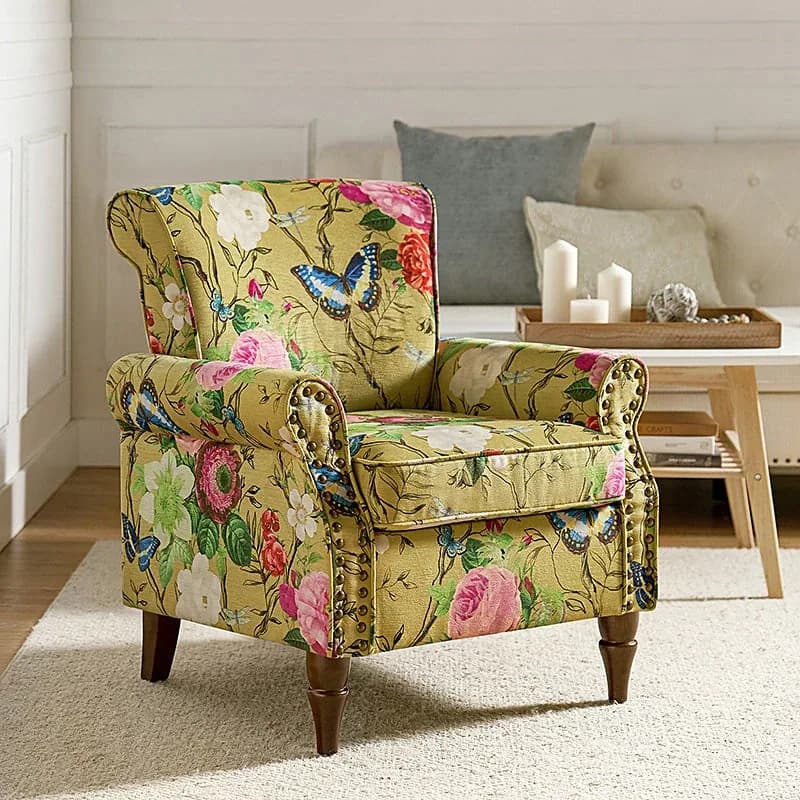
Sometimes the Old Furniture Has Better Bones
Furniture quality is difficult to judge in a showroom because the most important parts are hidden.
You can see the upholstery fabric.
You can sit on the cushions.
You can inspect the legs.
But you usually cannot see the internal frame that determines how the piece will behave after years of use.
Consumer Reports identifies a kiln-dried hardwood frame as a hallmark of high-quality upholstered furniture, while modern upholstered furniture can also be constructed from plywood, engineered wood, MDF, particleboard, and combinations of these materials.
That does not mean every old couch is well made or every new couch is poorly made. Excellent furniture is manufactured today, including pieces with high-quality engineered hardwood and plywood frames.
But mass-market furniture is also built to meet specific manufacturing, shipping, weight, and retail-price targets. Lower-cost pieces may rely more heavily on lighter engineered materials and economical construction. Furniture specialists generally consider strong hardwood or high-grade engineered hardwood frames preferable to MDF or particleboard in major load-bearing parts of upholstered seating.
This is where an older piece can become interesting.
If your couch has been in the family for 25 years and the frame is still square and solid, that history is evidence of something.
The upholstery may have failed.
The foam may have softened.
But the structure has already demonstrated that it can last.
Replacing that furniture with an inexpensive new piece is not necessarily an upgrade.
Sometimes it is the opposite.
Reupholstery Lets You Keep the Expensive Part
When people compare furniture reupholstery with buying new furniture, they often compare only the final prices.
A new couch costs X.
Reupholstering the old couch costs Y.
But those two products may not be equivalent.
The better comparison is:
What would it cost to buy new furniture with the same construction quality, size, comfort, and character as the piece you already own?
That can produce a very different answer.
Design and upholstery professionals regularly recommend considering reupholstery when a piece has strong construction, attractive proportions, unique design, or personal value.
A well-built frame is essentially the foundation.
Fabric, foam, batting, webbing, springs, piping, and other upholstery components can be repaired or replaced.
If the foundation is worth keeping, furniture reupholstery gives you the opportunity to rebuild everything around it.
You Are Not Restoring the Past. You Can Redesign It.
This is where custom upholstery becomes much more interesting than simply "fixing an old couch."
You do not have to recreate what was there before.
Suppose you have an upholstered bed that you love.
The proportions are perfect for your room. The headboard is the right height. You already know the frame is comfortable and stable.
But the beige fabric you chose ten years ago no longer fits your home.
You could spend weeks looking for another bed with the same dimensions.
Or you could keep your bed and completely change what it looks like.
Choose a textured performance fabric.
A warm bouclé.
A deep velvet.
A linen blend.
A patterned textile.
A completely different color.
Change the piping.
Remove decorative nails.
Add decorative nails.
Change tufting.
Simplify the design.
Make it softer and quieter or turn it into the focal point of the room.
Architectural Digest designers make precisely this point about reupholstery: good vintage and existing furniture can be modernized through new fabrics and changes to details such as piping, tufting, filling, and even legs.
Furniture reupholstery is therefore not necessarily restoration in the strict sense.
It can be redesign.
The Fabric Becomes Your Choice, Not the Manufacturer's Choice
Buying ready-made furniture means choosing from somebody else's combinations.
You may love the couch but dislike the fabric.
Love the color but dislike the texture.
Find the right sectional but discover that the available performance fabric options are limited.
With custom fabric upholstery, the process works in reverse.
You begin with the furniture you already like and choose the material for your actual life.
A formal chair in a bedroom can use one type of textile.
A family-room couch with children and pets needs something entirely different.
A dining bench may need high abrasion resistance and easier cleaning.
A decorative upholstered bed gives you much more freedom because it does not receive the same kind of daily friction as a seat cushion.
Different upholstery fabrics behave differently in real use, which is why professional designers and upholsterers recommend matching the material to the furniture's purpose rather than choosing by appearance alone.
That is one of the biggest differences between reupholstery and shopping for replacement furniture.
You are no longer choosing the closest available option.
You are specifying the option.
The Couch Can Feel Different Too
Fabric gets most of the attention because it is visible.
But full furniture reupholstery goes deeper.
Once the old upholstery is removed, an upholsterer can inspect what has happened underneath it.
Batting can flatten.
Webbing can stretch.
Springs can require attention.
Edges that once felt full can collapse.
Cushions can become uncomfortable even while the frame remains perfectly usable.
A proper reupholstery project provides access to those internal components. Worn padding and foam can be replaced rather than hidden under new fabric.
That means an old couch does not necessarily have to feel like the old couch after it is finished.
The seat can be made firmer.
Back cushions can be rebuilt.
Flattened arms can regain their shape.
Foam density can be selected differently.
A piece that was originally too soft or too hard can sometimes be adjusted while it is being rebuilt.
You are not just changing its clothes.
You are rebuilding the way it feels.
Some Furniture Cannot Simply Be Replaced
There is also a category of furniture for which price comparisons miss the point entirely.
Your grandmother's chair.
The couch you bought for your first house.
A vintage piece you found years ago.
A custom banquette built specifically for a room.
A bed with proportions you have never been able to find again.
A chair that happens to fit your body perfectly.
Furniture can become familiar in a way mass-produced replacement products cannot reproduce.
Architectural Digest notes that vintage and inherited furniture often carries an emotional connection and history in addition to its construction or design value.
When the frame is sound, worn fabric does not have to be the end of that relationship.
It can be the beginning of the next version of the piece.
Your Old Furniture Can Become the Most Individual Piece in the Room
There is another reason reupholstery has become part of interior design rather than simply furniture repair.
Uniqueness.
Walk through several large furniture stores and you will see the same trends repeated.
Similar shapes.
Similar neutral fabrics.
Similar colors.
Similar proportions.
That consistency is useful if you want something quickly.
It is less useful if you want a room that feels specifically yours.
A reupholstered vintage chair in an unexpected textile cannot be ordered from a catalog.
Neither can your existing headboard rebuilt in the exact fabric you selected.
Nor your grandmother's armchair redesigned to work in a modern interior.
Designers use reupholstery precisely because it allows an existing piece to be separated from the era of its original fabric while preserving the form and character that made the furniture interesting in the first place.
A dated chair can become contemporary.
A plain couch can become dramatic.
A traditional headboard can become minimal.
A forgotten piece can become the thing people ask about when they enter the room.
That is difficult to achieve by buying whatever happens to be on a showroom floor.
Reupholstery Is Also a Form of Reuse
There is a straightforward environmental argument as well.
If a structurally usable piece of furniture can remain in service, there is less reason to discard the entire object simply because its fabric or padding has reached the end of its useful life.
The EPA specifically recommends maintaining and repairing furniture and other products so they do not have to be thrown away and replaced as frequently.
Furniture reupholstery will still use new materials. Fabric, foam, batting, thread, and other components have their own environmental footprint.
So it should not be presented as impact-free.
The advantage is simpler: much of the existing product can continue being used.
A hardwood frame that took resources and energy to manufacture decades ago does not need to become waste merely because the upholstery has worn out.
But Not Every Old Piece Deserves Reupholstery
This is important.
"Old" is not the same as "good."
There are old couches with poor frames.
There are new couches with excellent frames.
Reupholstery makes the most sense when the underlying furniture gives you a reason to invest in it.
A professional upholsterer should look at the structure before recommending a major project.
Does the frame remain solid?
Are important joints stable?
Does the furniture have significant movement or structural damage?
Is the design worth preserving?
Are replacement parts of the internal upholstery practical?
Do you actually like the dimensions and comfort of the piece?
If the frame itself is failing and the furniture has no particular design, functional, or sentimental value, replacement may make more sense.
This is why good upholsterers talk about furniture having "good bones." The quality and construction of the underlying piece should influence whether it is worth rebuilding.
The Best Candidate May Already Be in Your House
People sometimes shop for new furniture because they are tired of looking at what they own.
That is understandable.
After seeing the same couch every day for twelve years, it becomes difficult to imagine it differently.
Try ignoring the fabric for a moment.
Look at the shape.
Do you like the arms?
The height?
The depth?
Does it fit the room?
Is it comfortable?
Has the frame remained stable?
Would you choose it again if it were sitting in a showroom today in completely different upholstery?
If the answer is yes, you may not need a different piece of furniture.
You may need a different version of the one you already have.
A New Fabric Can Start a Second Life
Good furniture does not have to stay visually frozen in the year it was purchased.
That is the beauty of upholstery.
The surface is replaceable.
Styles change.
Homes change.
Families change.
Fabric wears.
The frame can stay.
A well-built couch can move from traditional fabric to something clean and contemporary.
An old upholstered bed can become the centerpiece of a redesigned bedroom.
Dining chairs can change completely without replacing the set.
A vintage armchair can keep its proportions and craftsmanship while losing every visual reference to the decade it came from.
That is why people choose fabric reupholstery even when buying new furniture would be easier.
They are not always trying to save an old object.
Sometimes they have realized that the object was never the problem.
The old upholstery was.
If you already own furniture with a quality frame, good proportions, and a place in your home, professional [fabric upholstery repair and reupholstery] can preserve what is worth keeping and replace everything that is not.
The result is not simply old furniture made new.
It is furniture made yours.