
Saltwater Damage And Marine Upholstery: Why Thread, Foam, And Vinyl Fail Together
Saltwater exposure does not damage boat seating in only one place. It affects the marine-grade vinyl surface, the stitching that holds the cover together, and the foam cushion core underneath.
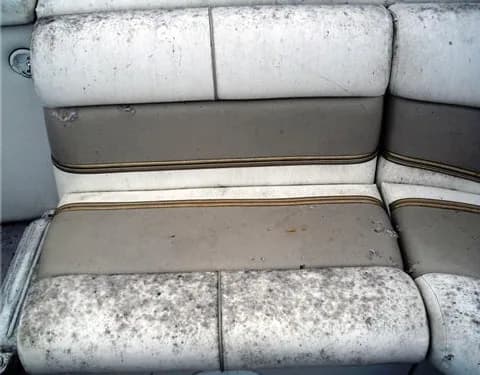
At first, the seat may simply look dirty, stiff, faded, or slightly discolored. Over time, salt residue can weaken thread, dry the vinyl surface, and pull moisture into seams where ordinary cleaning cannot reach.
For coastal boat owners, salt water damage upholstery repair often becomes necessary when seats begin cracking, separating, flattening, or holding odor even after normal washing.
Why Saltwater Is Hard On Marine Upholstery
Saltwater leaves behind mineral residue after moisture evaporates. That residue can remain on vinyl, seams, piping, bolsters, and deck seating long after the surface appears dry.
Salt Crystals Create Surface Abrasion
Dried salt forms small crystals that can act as an abrasive. Each time someone sits, slides across a cushion, or steps against the seating, that residue can rub against the vinyl coating and stitching.
Over time, repeated friction may contribute to:
Surface dullness
Stiff vinyl
Premature wear
Discoloration
Weakening around stitch holes
Deterioration of piping and high-contact areas
Heat And UV Exposure Accelerate The Damage
Salt exposure rarely happens in isolation. Marine seating is also exposed to direct sunlight, high temperatures, humidity, and repeated wet-dry cycles.
Heat can dry the vinyl surface, while UV exposure gradually weakens the material. When combined with salt residue, these conditions can accelerate cracking and material fatigue.
Marine vinyl is designed for wet environments, but it still depends on a flexible protective surface and intact seams.
How Thread, Foam, And Vinyl Fail Together
A boat seat functions as a layered upholstery system.
The vinyl creates the exterior barrier. Thread holds individual panels under tension. Foam provides shape, comfort, and support.
When one part of the system begins to fail, the others can quickly become affected.
Thread Failure Can Open The Door To Moisture
Stitching often shows wear first in areas that experience frequent movement and tension.
Common high-stress locations include:
Corners
Seat backs
Hinge points
Bolsters
Piping
Cushion edges
Entry and exit areas
Salt residue can collect around stitch holes and seams. As the thread ages, repeated friction and tension can cause stitches to loosen or break.
Once a seam opens, water has a direct path into the cushion.
Moisture Can Reach The Foam Core
After water passes through an open seam, it can travel into foam edges and interior cushion layers.
Damp foam may remain wet much longer than the vinyl surface. Over time, it can lose resilience, compress unevenly, and retain musty odors.
The result may be a seat that feels soft or flat even though the exterior damage initially appeared minor.
Vinyl Can Lose Flexibility And Shape
As marine vinyl ages under salt, heat, and UV exposure, it may become increasingly stiff.
Once flexibility is reduced, the material has more difficulty moving with the cushion underneath.
This can lead to:
Cracking
Wrinkling
Surface splitting
Separation around seams
Loose-fitting covers
Tearing around stitch holes
Marine grade vinyl repair may be effective when damage is localized, but larger structural failures usually require more extensive restoration.
Common Stages Of Saltwater Upholstery Damage
Saltwater damage usually develops progressively rather than appearing all at once.
| Stage of Damage | Visible Signs | Hidden Problem | Recommended Action |
|---|---|---|---|
| Early Stage | Salt film, light stiffness, minor discoloration | Surface residue; seams still intact | Cleaning, conditioning, and seam inspection |
| Moderate Stage | Loose stitching, small cracks, soft cushion edges | Moisture entering stitch channels or foam edges | Marine vinyl repair, seam repair, and targeted foam evaluation |
| Severe Stage | Split panels, sagging seats, strong odor, collapsed foam | Failed waterproof barrier and damaged cushion core | Full upholstery restoration or seat reupholstery |
Early Saltwater Damage: When Cleaning May Be Enough
Regular rinsing and boat upholstery cleaning are especially important after use in saltwater.
Fresh water can remove salt residue before it dries into abrasive deposits.
Signs The Damage Is Still Mostly At The Surface
Cleaning may be sufficient when:
Vinyl remains flexible
Stitching is intact
Seams remain tight
Foam feels firm
There are no persistent odors
No cracks are forming around stitch lines
Cushions return to shape normally
At this stage, cleaning and inspection can help prevent a minor maintenance issue from becoming an upholstery repair.
Moderate Damage: When Seams And Foam Need Attention
The situation changes once stitching starts loosening or cushions develop soft areas.
Open Seams Are More Than A Cosmetic Defect
A separated seam exposes the interior of the seat to moisture.
Even a small opening can allow water to enter during washing, rain, spray, or normal boat operation.
If the seam remains open, moisture exposure can continue every time the boat gets wet.
Soft Edges Can Indicate Internal Moisture
Foam often begins deteriorating near seams and cushion edges where water enters first.
A cushion may still appear acceptable from above while the perimeter becomes noticeably softer.
At this stage, the cover may need to be opened so the foam, backing, and stitching can be evaluated properly.
Severe Saltwater Damage: When Reupholstery Becomes Necessary
Full restoration is more likely when multiple parts of the seat have deteriorated together.
Signs Of Advanced Damage
More extensive work may be required when the seat has:
Split vinyl panels
Multiple failed seams
Severe cracking
Permanent sagging
Strong odor
Saturated or collapsed foam
Loose upholstery
Significant shape loss
In these cases, cleaning or isolated patching may not provide a durable result.
When Cleaning Is No Longer Enough
Boat upholstery cleaning plays an important preventive role, but it has clear limits.
Cleaning can remove surface salt, dirt, sunscreen, oils, and other contaminants. It cannot rebuild thread strength, restore collapsed foam, or repair an open seam from inside the upholstery.
Persistent Odor Usually Requires Deeper Inspection
If a seat continues to smell after it has been cleaned and dried, moisture may remain inside the cushion.
The source can be:
Damp foam
Contaminated backing
Moisture trapped around seams
Deteriorated internal material
Repeated surface cleaning will not remove a problem that originates inside the seat.
Recurring Stains Along Seams Can Signal Moisture Intrusion
Discoloration that repeatedly returns along stitch lines may indicate that contaminants or moisture are moving from inside the cushion toward the surface.
That is a sign that inspection should go beyond the vinyl exterior.
Marine Vinyl Repair Versus Full Reupholstery
Not every damaged boat seat needs complete recovering.
When Marine Vinyl Repair Can Work
Localized repair may be appropriate when:
Damage affects a small area
Foam remains dry and supportive
Most of the vinyl is flexible
Seams surrounding the damage are still strong
The upholstery maintains proper tension
Possible repairs can include seam work, stitching replacement, localized panel repair, or replacement of a limited upholstery section.
When Full Reupholstery Is More Practical
Reupholstery becomes more appropriate when failures are widespread.
If the vinyl is brittle, several seams are opening, and foam has lost support, repairing one area may simply move stress to another weak section.
At that point, rebuilding the seat may provide a more reliable result.
Why Professional Repair Protects The Whole Seat System
Professional salt water damage upholstery repair should evaluate the seat as a complete system rather than treating only the visible surface.
Vinyl Condition
The technician should determine whether the vinyl is still flexible enough to repair or whether the material has deteriorated beyond practical restoration.
Seam And Thread Strength
Existing stitching should be checked for weakened thread, enlarged stitch holes, and areas where tension has already begun pulling panels apart.
Foam Density
Foam should be inspected for:
Soft areas
Permanent compression
Moisture
Odor
Uneven support
Loss of original shape
Drainage And Moisture Control
The cause of repeated water exposure should also be considered.
Poor drainage, trapped moisture, and insufficient drying can damage newly repaired upholstery if the underlying conditions remain unchanged.
Why Temporary Patches Often Fail
Temporary patches can cover a visible tear, but they do not necessarily restore the structural integrity of the seat.
A Patch Does Not Repair Weak Thread
If the stitching surrounding the damaged area is already deteriorating, closing one opening may not stop adjacent seams from failing.
Surface Products Cannot Restore Foam
Conditioners, sprays, and cleaning products do not restore foam that has collapsed or absorbed moisture.
Harsh Cleaners Can Make Damage Worse
Strong household cleaners may strip protective coatings, dry marine vinyl, discolor the surface, or weaken thread.
Products designed for marine upholstery are generally safer than aggressive chemicals intended for unrelated materials.
What Professional Marine Upholstery Restoration Can Include
Depending on the condition of the seat, restoration may involve several different types of work.
Localized Upholstery Repair
For smaller areas of damage, work may include:
Replacing damaged stitching
Repairing open seams
Correcting loose sections
Replacing a damaged panel
Restoring piping or bolster areas
Foam Repair Or Replacement
When the cushion core has been compromised, damaged sections of foam may need to be reshaped, rebuilt, or completely replaced.
Complete Seat Reupholstery
For severe damage, the existing cover may be removed and replaced with new marine-grade materials.
This can include:
New marine vinyl
New foam
New stitching
Rebuilt piping
Corrected cushion shape
Improved fit and tension
Choosing The Right Repair Strategy
Saltwater upholstery damage should be evaluated based on more than surface appearance.
A seat that looks slightly faded may still be structurally sound, while another seat with only a small open seam may already have moisture inside the cushion.
A qualified boat upholstery shop or mobile marine canvas and upholstery repair service can inspect the vinyl, seams, thread, foam, and internal moisture condition before recommending the appropriate repair.
When saltwater damage has progressed beyond the surface and affected several layers of the seat, [marine upholstery restoration] is usually more reliable than repeated cleaning or temporary patching.