
Mildew, Musty Odors, And Soft Foam: Boat Seat Restoration
Mildew on marine seats often begins as a surface stain, but it can also signal hidden moisture damage inside the cushion. If boat seats smell musty, feel soft, or sag under normal weight, cleaning the marine vinyl may address only what is visible.
Water can pass through worn seams, weak stitching, small tears, or gaps around bolsters and deck seating, then settle inside the cushion core. Once moisture reaches the foam, odors, mildew, and material breakdown become much harder to correct.
Marine upholstery restoration helps determine whether the seat needs cleaning, localized repair, foam replacement, or complete recovering.
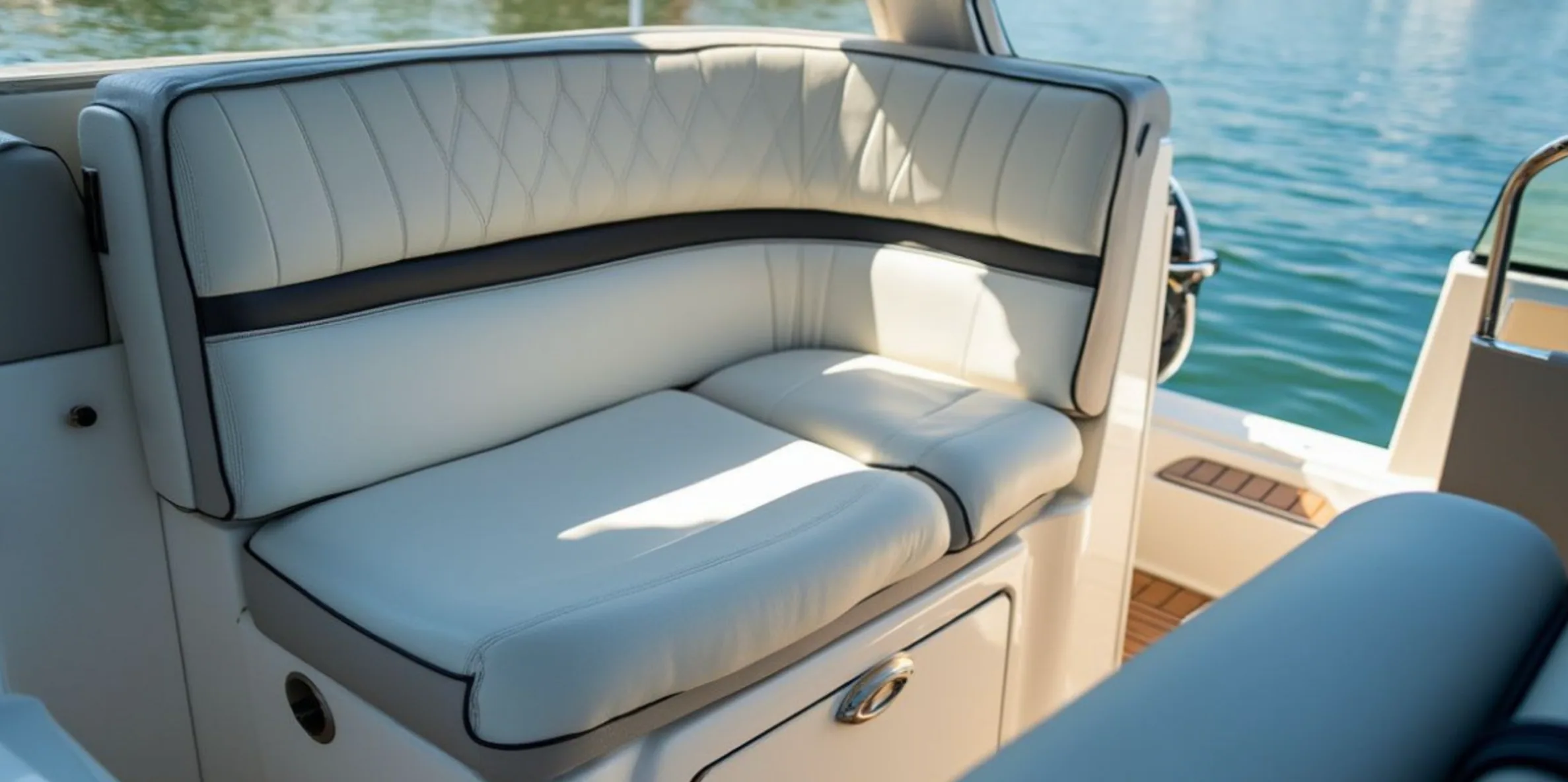
Why Mildew Stains Are More Than A Cosmetic Problem
Mildew develops where moisture, heat, and organic residue remain trapped. Boats stored under covers, kept in humid slips, or regularly exposed to spray can accumulate sunscreen, salt, food residue, and other contaminants while receiving limited airflow.
A mildew stain that repeatedly returns after cleaning may indicate that the problem is no longer limited to the vinyl surface.
Moisture Can Travel Through Seams And Stitching
Marine-grade vinyl is designed to resist water, but the finished seat contains many possible entry points. Stitching holes, piping, seams, worn thread, and previous repairs can all allow moisture to move beneath the upholstery.
Once water reaches areas that cannot dry properly, mildew may develop underneath the vinyl or along the edges of the foam.
Recurring Mildew Can Indicate Hidden Contamination
If a seat looks clean after treatment but develops stains or musty odor again, moisture may remain trapped inside. Surface cleaners cannot remove contamination that has reached the foam or other internal upholstery components.
What Happens Inside The Foam Core
The condition of the foam is one of the most important factors when evaluating an older marine seat.
When moisture enters through weakened stitching or damaged vinyl, the cushion core may remain damp much longer than the exterior surface.
Damp Foam Can Hold Odor
Foam can retain moisture and musty odors even after the vinyl has dried. This is one reason a boat seat may continue to smell after repeated cleaning.
If the odor originates inside the cushion, additional surface cleaning usually will not correct the underlying problem.
Foam Can Lose Its Shape And Support
Over time, moisture exposure and normal compression can reduce foam density and resilience. The cushion may begin to feel unusually soft, compress unevenly, or fail to return to its original shape.
This can lead to:
Sagging seating surfaces
Loose or wrinkled vinyl
Uneven cushion height
Reduced support
Poor fit around bolsters and edges
When the foam has deteriorated significantly, marine seat foam replacement may be necessary.
Stages Of Boat Seat Moisture Damage
Not every mildew problem requires complete reupholstery. The correct repair depends on how far the moisture damage has progressed.
| Stage of Damage | Visible Signs | Hidden Problem | Recommended Action |
|---|---|---|---|
| Early Stage | Light mildew, mild odor, tight vinyl | Surface soil with intact seams | Boat carpet and upholstery cleaning plus inspection |
| Moderate Stage | Recurring stains, seam gaps, soft spots | Moisture around foam edges or stitching channels | Marine vinyl repair, seam work, and partial foam correction |
| Severe Stage | Sagging cushions, strong odor, loose covers | Deteriorated foam and failed upholstery barrier | Boat seat reupholstery with new foam and marine-grade vinyl |
When Cleaning Is Enough
Cleaning can be appropriate when the upholstery remains structurally sound and there is no evidence that moisture has penetrated deeply into the cushion.
Signs That Cleaning May Be Sufficient
Cleaning is generally the first option when:
Marine vinyl remains flexible and intact
Seams and stitching are closed
The cushion feels firm and uniform
There are no persistent soft spots
Musty odor disappears after complete drying
Mildew does not quickly return
Boat carpet and upholstery cleaning can remove surface soil and contamination from seating, flooring, side panels, and other marine interior surfaces.
When Marine Vinyl Repair Is Needed
A seat may still have good foam while showing localized upholstery damage.
Small tears, open seams, deteriorated stitching, or damaged piping can create entry points for future moisture. In these cases, marine vinyl repair may prevent a relatively minor defect from developing into a larger upholstery problem.
Common Repairable Areas
Localized marine upholstery repair may include:
Open or separated seams
Broken stitching
Small vinyl tears
Damaged piping
Loose upholstery sections
Localized cover damage
Repairing these areas early can help protect the foam underneath.
When Foam Replacement Becomes Necessary
Foam replacement should be considered when the cushion no longer provides proper support or when moisture and odor have penetrated too deeply into the seat.
Signs Of Deteriorated Boat Seat Foam
Common warning signs include:
Deep or permanent sagging
Extremely soft areas
Uneven compression
Strong odor from inside the cushion
Foam that remains damp
Vinyl that has become loose because the cushion has collapsed
Depending on the construction of the seat, damaged foam may be partially corrected or completely replaced.
When Full Boat Seat Reupholstery Is The Better Option
Full boat seat reupholstery becomes more practical when several components have failed at the same time.
If the vinyl is brittle, seams are opening, foam has deteriorated, and the cover no longer maintains its shape, repairing each individual defect may provide only a temporary result.
Rebuilding The Seat As A Complete System
During reupholstery, the seat can be evaluated as a complete structure rather than as separate cosmetic problems.
The work may include:
Removing deteriorated marine vinyl
Replacing compromised foam
Correcting cushion shape
Rebuilding damaged upholstery sections
Replacing weakened stitching
Installing new marine-grade vinyl
Restoring piping and bolsters
Improving fit and tension across the seat
This approach can be especially appropriate for older deck seating, boat benches, captain's chairs, and heavily used marine cushions.
Why Temporary Fixes Do Not Solve Internal Moisture Damage
Sprays, bleach, adhesive patches, and conditioners may improve appearance temporarily, but they do not remove water trapped inside foam.
Harsh Cleaning Can Create Additional Damage
Aggressive chemicals may discolor marine vinyl, remove protective finishes, dry the material, or weaken stitching. A strong cleaner can make the surface appear better while leaving the underlying moisture problem unchanged.
Adhesive Patches Do Not Correct Failed Foam
A patch may close a tear, but it cannot restore collapsed foam, remove odor from the cushion core, or correct widespread deterioration around the surrounding seams.
Temporary treatments are most useful only when the underlying upholstery and foam remain structurally sound.
What A Professional Marine Upholstery Inspection Should Evaluate
A proper inspection should consider more than the visible condition of the vinyl.
Cover And Seam Condition
The technician should inspect the marine vinyl, piping, stitching, seam tension, and areas where the upholstery attaches to the seat structure.
Foam Density And Cushion Shape
The cushion should be checked for soft areas, uneven compression, permanent sagging, and deterioration around the edges.
Moisture Entry Points
Open seams, damaged stitching, tears, and previous repairs should be examined for signs that water has entered the upholstery system.
Drainage And Drying Conditions
Marine seating should also be evaluated for conditions that can repeatedly trap moisture. Even newly restored upholstery can develop problems if water has nowhere to drain or the seat cannot dry properly.
Materials Matter In Marine Seat Restoration
When recovering is necessary, materials should be selected specifically for marine environments.
Waterproof boat upholstery materials and marine-grade vinyl are designed to tolerate moisture, sunlight, temperature changes, and regular use better than many general-purpose upholstery materials.
Proper thread, stitching patterns, foam selection, and installation are equally important. A durable marine seat depends on the entire upholstery system working together.
Choosing The Right Restoration Approach
The appearance of mildew is only one part of the diagnosis. The condition of the seams, foam, vinyl, and internal moisture determines how extensive the repair needs to be.
A professional boat upholstery shop or mobile boat upholstery service can inspect the seating and determine whether cleaning, seam repair, foam correction, partial recovering, or complete reupholstery is appropriate.
For musty cushions, sagging seats, recurring mildew, or damaged marine vinyl, [boat upholstery repair] can provide a more durable solution than repeated surface treatments.