
RV Upholstery Repair Vs Replacement For Motorhome Seats
RV Upholstery Repair vs Replacement: Which Option Is Better for Your Motorhome?
RV seats, captain chairs, sofas, dinette cushions, sleeper furniture, and armrests often wear faster than owners expect.
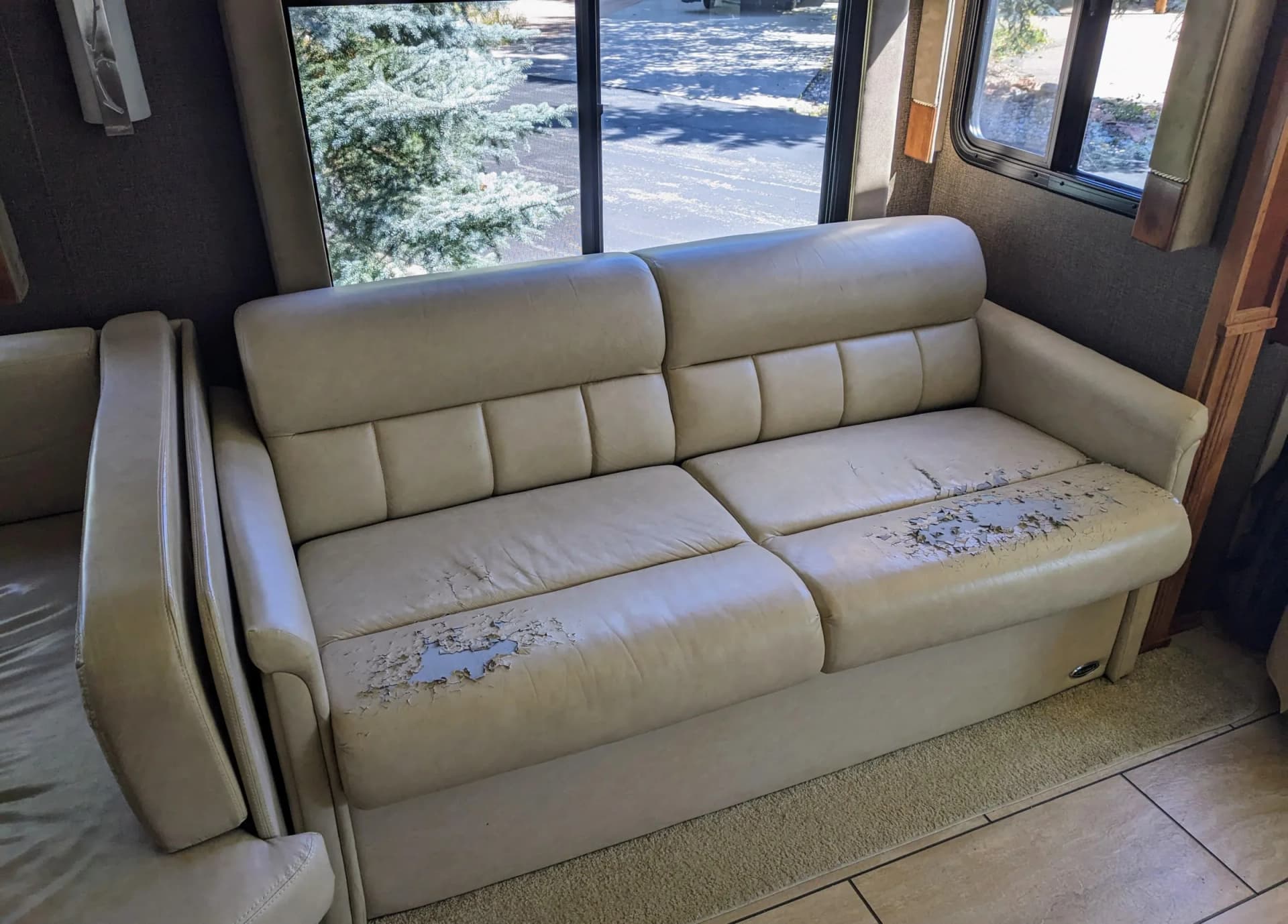
Peeling faux leather, cracked vinyl, flattened foam, open seams, and outdated fabric can make an otherwise comfortable motorhome feel neglected. However, visible upholstery damage does not always mean that the entire furniture piece must be replaced.
Depending on the condition of the material, foam, frame, and mechanism, the most practical solution may be:
Localized RV upholstery repair
Replacement of individual damaged panels
Cushion or foam rebuilding
Complete RV furniture reupholstery
Full furniture replacement
The correct choice should address the cause of the damage, preserve the original fit where possible, and provide a durable result for the way the RV is used and stored.
Why RV Furniture Often Wears Faster Than Home Furniture
RV furniture operates in a more demanding environment than ordinary residential furniture.
Inside a motorhome or travel trailer, upholstery may be exposed to:
Significant temperature changes
High humidity
Direct sunlight
UV exposure through large windows
Travel vibration
Movement during braking and turning
Limited ventilation during storage
Repeated folding and slide-out operation
Friction against walls, tables, and nearby furniture
These conditions can accelerate the deterioration of upholstery, adhesives, foam, seams, and protective finishes.
Slide-out movement may also create rubbing or compression around sofas, dinettes, and sleeper units. Even a small clearance issue can gradually damage piping, corners, armrests, or side panels.
In many cases, peeling and cracking are caused by the original material reaching the end of its service life rather than by improper care.
Why Faux Leather and Bonded Materials Peel
Many factory RV interiors use synthetic leather, bonded leather, or leather-look materials because they are lightweight, visually consistent, and relatively inexpensive.
These materials can look attractive when new, but some begin peeling when the upper coating separates from the fabric or composite backing.
Common signs of material failure include:
Flaking
Peeling
Surface bubbles
Cracking across large areas
Sticky or brittle sections
Fabric backing becoming visible
Damage spreading beyond the original worn spot
This type of deterioration is different from ordinary color wear on genuine leather.
When the surface layer is delaminating from the backing, adding filler, color, or another coating may temporarily improve a small area, but it usually does not stop the surrounding material from continuing to fail.
For widespread peeling, panel replacement or complete reupholstery is generally more durable than repeated surface repair.
Repair, Reupholstery, and Replacement Are Different Services
These options are often grouped together, but they address different levels of damage.
Localized RV Upholstery Repair
Localized repair preserves most of the existing upholstery and addresses one specific defect.
It may include:
Seam repair
Stitching replacement
Small tear repair
Scratch or scuff restoration
Armrest repair
Piping repair
Color restoration
Replacement of one damaged panel
Minor foam reshaping
This option is most appropriate when the surrounding material remains strong and the damage is limited to a relatively small area.
RV Furniture Reupholstery
Reupholstery involves removing the worn covering and installing new material over the existing frame or furniture base.
Depending on the condition of the piece, the project may also include:
Foam replacement
Cushion reshaping
Reinforcement
New piping
New zippers
Pattern correction
Repair of internal support materials
Updating the color or design
RV furniture reupholstery is often appropriate when the frame and mechanism remain serviceable but the visible covering is peeling, brittle, outdated, or damaged across several panels.
Complete Furniture Replacement
Replacement means removing the entire sofa, recliner, captain chair, or dinette unit and installing another furniture piece.
This may be the better option when:
The frame is broken
The reclining or sleeper mechanism has failed
Structural parts are missing
The furniture no longer meets the owner’s needs
Repair costs approach the cost of a properly fitting replacement
The owner wants a completely different seating layout
Replacement can solve structural problems, but it may introduce fitment, shipping, access, and installation challenges.
RV Upholstery Repair vs Reupholstery vs Replacement
| Option | Best For | Main Advantage | Possible Limitation |
|---|---|---|---|
| Localized RV upholstery repair | Small tears, open seams, scratches, armrests, and isolated panel damage | Lower cost and less disruption | Does not solve widespread peeling or material failure |
| Individual panel replacement | One torn bolster, peeling side panel, or localized material failure | Preserves most of the original cover | Matching older material may be difficult |
| Foam and cushion rebuilding | Sagging seats, flattened bolsters, loose covers, poor support | Restores comfort and original shape | Upholstery may also need replacement if stretched or damaged |
| Full RV furniture reupholstery | Strong frames with worn, peeling, or outdated upholstery | Custom fit and broader material choice | More labor-intensive than a minor repair |
| Complete furniture replacement | Broken frames, failed mechanisms, or unsuitable layout | Provides a completely new furniture unit | Fitment, freight, removal, and installation may increase cost |
| Mobile or on-site RV repair | Large or difficult-to-remove furniture | Reduces transportation and removal needs | Some treatments and reupholstery work require shop equipment |
When Localized RV Upholstery Repair Is Usually Enough
Repair may be appropriate when the defect is isolated and the surrounding material remains stable.
Common repairable conditions include:
Open Seams
A seam can often be restitched when the thread has failed but the upholstery has not torn through the stitch holes.
If the surrounding vinyl, leather, or fabric is brittle or ripped, sewing the same area again may not hold. Reinforcement or panel replacement may then be necessary.
Small Tears and Punctures
Limited tears may sometimes be reinforced and repaired when they are located in a relatively stable area.
A tear beside a seam, on a heavily stretched seat edge, or in deteriorating synthetic material may continue opening and require replacement of the affected panel.
Worn Armrests
RV armrests experience repeated contact with skin, clothing, drinks, pets, and sunlight.
When the damage is limited to the finish or one removable cover, localized RV armrest repair may be sufficient. Widespread peeling or compressed foam may require complete armrest re-covering and reshaping.
Surface Wear on Genuine Leather
Genuine leather may develop scratches, fading, dryness, body-oil contamination, or worn protective finish.
When the leather remains flexible and structurally sound, professional cleaning, repair, color restoration, and protective refinishing may preserve the original material.
One Damaged Panel
A sofa or captain chair is normally assembled from multiple panels. When only one section has failed, that panel may be replaced without reupholstering the complete piece during onsite appointment.
This can be particularly effective for side panels, bolsters, seat inserts, or armrests.
Why Full Reupholstery Often Makes More Sense Than Buying New RV Furniture
Many RV furniture frames, mounting bases, recliner systems, and cushion foundations remain usable long after the original upholstery begins peeling or cracking.
When the structure still fits the coach and functions properly, reupholstery can preserve several important advantages.
The Existing Furniture Already Fits
RV furniture is often designed around limited floor space, wall angles, wheel wells, slide-outs, storage compartments, seat-belt mounts, and narrow walkways.
A replacement piece may have different:
Width
Depth
Height
Bolt pattern
Reclining clearance
Wall clearance
Slide-out clearance
Seat-belt access
Entry-door requirements
Even a small difference may prevent proper installation or interfere with surrounding components.
Reupholstery preserves the original dimensions and mounting points.
The Existing Color and Design Can Be Updated
Custom RV interior upholstery allows owners to coordinate new material with:
Flooring
Cabinetry
Wall panels
Window treatments
Other seating
Driver and passenger chairs
Existing trim
This can create a more integrated result than installing generic replacement furniture that does not match the rest of the interior.
Better Materials Can Be Selected
Reupholstery gives the owner more control over durability, texture, color, cleanability, and expected use.
Instead of repeating the same material that failed, the project can use an upholstery product better suited to the RV’s climate, storage conditions, and frequency of use.
Foam and Comfort Can Be Improved
The existing seat may fit the motorhome correctly but no longer feel comfortable.
During reupholstery, foam can be reshaped, reinforced, or replaced. Firmness and cushion profile can also be adjusted within the limitations of the furniture structure and mechanism.
When Complete Replacement May Be the Better Choice
Reupholstery should not be recommended automatically.
Complete furniture replacement may be more practical when:
The frame is extensively damaged
A sleeper or reclining mechanism has failed
Important structural parts are unavailable
The furniture is poorly secured
Water damage has affected the internal structure
Odor or contamination cannot be removed
The owner wants a different seating configuration
The unit no longer provides adequate comfort or function
The replacement must still be evaluated for fit, mounting, clearance, access, and safe use inside the RV.
A furniture piece that fits in a residential room may not be appropriate for a moving vehicle or a slide-out installation.
Foam Condition Should Be Evaluated Before Upholstery Work
Foam deterioration can make upholstery appear more damaged than it is.
Collapsed foam may cause:
Wrinkled seat covers
Uneven cushion height
Loose material
Flattened bolsters
Reduced support
Upholstery rubbing against the frame
Premature seam failure
Covering damaged foam with new upholstery may create a cleaner appearance initially, but the finished seat may still feel uncomfortable or look distorted.
During RV interior restoration, foam should be checked for:
Density
Compression
Shape retention
Dryness or crumbling
Odor
Moisture damage
Fit around mechanisms and frames
Depending on the condition, foam may be reshaped, supplemented, or completely replaced.
Captain Chairs Require Specialized Evaluation
RV captain chairs and motorhome pilot seats may contain:
Reclining mechanisms
Swivel bases
Seat belts
Armrests
Heating elements
Power controls
Occupancy sensors
Integrated headrests
Complex foam shapes
For this reason, RV captain chair repair should account for both appearance and function.
A worn entry bolster may need only localized restoration or panel replacement. Widespread peeling may require a complete new cover. Collapsed foam may need rebuilding so the upholstery fits correctly and the driver remains properly supported.
The completed work should not restrict controls, swivel movement, recline operation, or access to mounting hardware.
Dinette Cushions and Camper Cushions Have Different Needs
RV dinette cushion reupholstery is often simpler than captain-chair or recliner work, but the material and construction still matter.
Dinette cushions are exposed to:
Food and drink spills
Repeated compression
Sliding against walls
Storage use
Children and pets
Frequent removal and repositioning
A professional cushion project may include:
New covers
Zippers
Foam replacement
Dacron wrapping
Reinforced seams
Nonslip backing
Rounded or boxed cushion profiles
Removable covers with zippers can make future cleaning or foam replacement easier.
Material selection should reflect whether the dinette is used occasionally, daily, or converted into a sleeping surface.
Sleeper Sofas and Recliners Need More Than New Fabric
RV sleeper sofas and recliners contain moving parts that affect how upholstery must be patterned and installed.
The new material must allow the furniture to:
Fold
Recline
Open into a bed
Clear nearby walls
Move with the slide-out
Avoid catching in hinges or mechanisms
Excessively thick upholstery, misplaced seams, or loose fabric can interfere with operation.
Before reupholstery begins, the mechanism should be inspected and the furniture should be tested in all operating positions.
Choosing Better Materials for RV Interior Restoration
There is no single upholstery material that is ideal for every RV.
The best choice depends on:
Climate
Sun exposure
Storage conditions
Frequency of use
Children or pets
Cleaning requirements
Desired appearance
Budget
Whether the RV is used full-time or occasionally
Possible materials include:
Genuine Leather
Quality leather can provide comfort, durability, and a premium appearance. It can also be cleaned, repaired, and refinished when the material remains structurally sound.
Leather quality, finish, thickness, and protection level should be selected for the application.
High-Performance Vinyl
Commercial, marine, or automotive-grade vinyl may offer good cleanability, moisture resistance, and color consistency.
However, “marine grade” or “automotive grade” does not automatically mean that every product is appropriate for every RV. Flexibility, backing, UV resistance, abrasion performance, and installation requirements should be reviewed.
High-Performance Synthetic Upholstery
Modern silicone, polyurethane, and other engineered upholstery materials may offer softness, cleanability, and resistance to certain stains or environmental conditions.
Performance varies significantly by product, so manufacturer specifications should be evaluated rather than relying only on category names.
Upholstery Fabric
Fabric can be a practical choice for dinettes, cushions, sofas, and owners who prefer a softer or less temperature-sensitive surface.
High-use RV fabric should be selected for abrasion resistance, cleanability, seam performance, and resistance to fading.
Materials Commonly Described as Ultraleather
The term “Ultraleather” is sometimes used generically, but it is also associated with specific branded upholstery products.
Owners should confirm the actual manufacturer, product line, specifications, and warranty rather than assuming that every material described as “Ultraleather-style” has the same performance.
The right material should be selected based on documented characteristics and the intended application.
Mobile RV Upholstery and On-Site Repair
Mobile RV upholstery can be practical for large motorhomes or furniture that is difficult to remove.
On-site service may be appropriate for:
Minor leather or vinyl repair
Color restoration
Seam work
Inspection and measurements
Removal and installation of selected components
Certain cushion and armrest repairs
However, not every service should be completed inside the RV.
Shop service may be better for:
Full reupholstery
Extensive material removal
Foam rebuilding
Body-oil extraction
Adhesive-intensive work
Strong ventilation requirements
Complex patterning and sewing
Multi-stage curing
The decision should be based on safety, equipment needs, available workspace, and the quality of the expected result.
How to Decide Which Option Is Best
Before choosing repair, reupholstery, or replacement, evaluate the following.
Material Condition
Is the damage limited to one seam or panel, or is the material peeling throughout the furniture?
Frame and Mechanism
Are the frame, recliner, sleeper, swivel, and mounting systems still functional?
Foam Condition
Does the furniture retain its shape and support, or has the foam collapsed?
Fit
Would a replacement piece fit the available space, mounting points, doorway, and slide-out clearance?
Material Match
Can a localized repair or replacement panel be matched closely enough to the surrounding upholstery?
Expected Use
Is the RV used occasionally, seasonally, full-time, or as a rental?
Long-Term Cost
Would a temporary repair delay an unavoidable reupholstery project, or can it provide a durable solution?
Questions to Ask an RV Upholstery Shop
Is the material genuine leather, vinyl, bonded leather, or another synthetic product?
Is the damage localized or is the material failing throughout the piece?
Can one panel be replaced instead of reupholstering the entire unit?
Is the frame or mechanism still worth preserving?
Does the foam need reshaping or replacement?
Can the original dimensions and mounting points be maintained?
Which materials are recommended for the RV’s climate and use?
Can the new material be coordinated with the rest of the interior?
Can the work be completed on-site, or does it require shop service?
Would replacement create fitment or slide-out clearance problems?
A professional provider should explain the expected durability and limitations of each option rather than recommending the largest project automatically.
Final Recommendation: Repair, Reupholster, or Replace?
Localized RV upholstery repair is often appropriate for isolated tears, open seams, scratches, armrest wear, and individual damaged panels.
Full RV furniture reupholstery usually makes more sense when the frame and mechanism remain strong but the upholstery is peeling, brittle, outdated, or damaged across several areas.
Complete replacement may be the better option when the structure or mechanism has failed, contamination is severe, or the owner wants a different furniture layout.
Before ordering new furniture, have the existing piece evaluated. Reupholstery may preserve the original fit, improve material quality, restore comfort, and avoid the shipping, clearance, and installation problems associated with generic replacement units.
A professional assessment can determine whether the best solution is:
Localized repair
Seam or panel repair
Foam rebuilding
Captain-chair restoration
Dinette cushion reupholstery
Sofa or recliner reupholstery
Complete furniture replacement
Broader RV interior restoration
The best option is the one that fits the coach correctly, performs reliably, and provides a durable result for the way the motorhome is actually used.