
Mobile RV Upholstery Repair For Onsite Furniture Restoration
Mobile RV Upholstery Repair: When Onsite Furniture Restoration Makes More Sense
RV furniture is not always easy to remove, transport, or replace.
Captain chairs, sleeper sofas, dinette cushions, recliners, armrests, and built-in seating are often installed around tight floor plans, slide-outs, mounting brackets, storage compartments, and custom dimensions. A furniture piece that looks removable may be bolted through the floor, connected to electrical components, or too large to pass through the RV entry door without partial disassembly.
When upholstery begins peeling, cracking, sagging, or tearing, many owners assume that the furniture must be removed or replaced completely. In many cases, however, mobile RV upholstery provides a more practical solution.
When the frame and mechanisms remain functional, onsite RV furniture repair may correct localized damage, restore leather or vinyl surfaces, rebuild cushions, or prepare selected components for reupholstery without unnecessarily removing the entire furniture unit.
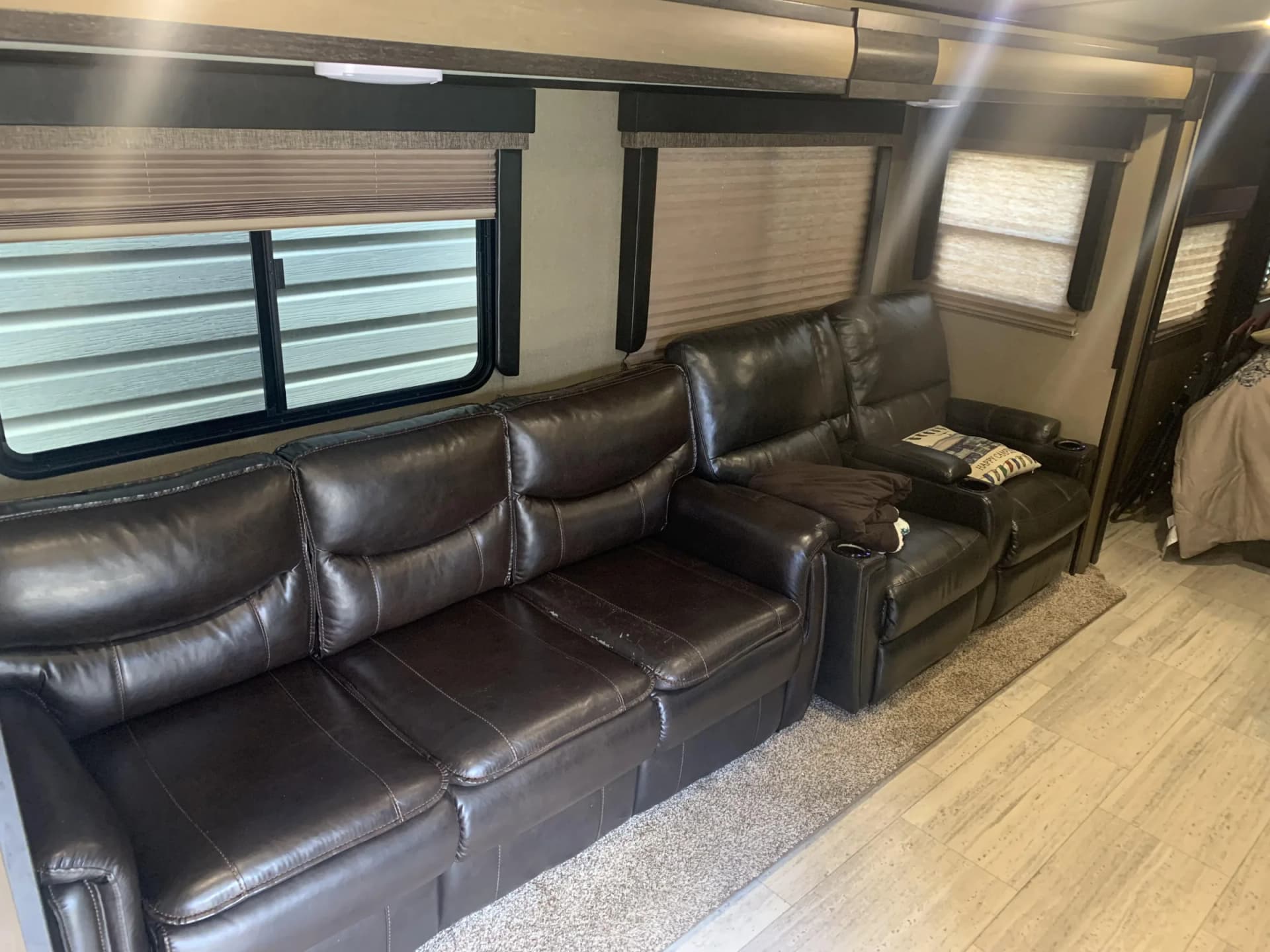
Why RV Furniture Can Be Difficult to Remove
Unlike standard residential furniture, RV seating is usually designed around limited space and a specific floor plan.
A motorhome sofa may be installed directly beside a slide-out wall. Captain chairs may use vehicle-specific bases and floor-mounted bolt patterns. Dinette cushions may be shaped around custom benches, storage compartments, or curved walls. Recliners and sleeper sofas may fit comfortably inside the coach but be too large to pass through the entry door in one piece.
Removing RV furniture may require:
Unbolting floor-mounted bases
Disconnecting electrical wiring
Removing armrests, backs, or mechanisms
Protecting surrounding cabinetry and trim
Carrying furniture through narrow openings
Transporting large pieces to a workshop
Reinstalling and realigning the furniture afterward
On an older RV, removal can also expose stripped bolts, weakened mounting points, brittle trim, damaged flooring, or hardware that is difficult to replace.
When the structure remains solid and the damage is limited to upholstery, cushions, seams, or surface wear, completing part or all of the service onsite may reduce unnecessary labor and disruption.
What Mobile RV Upholstery Actually Includes
Mobile RV upholstery does not mean that every type of reupholstery can be completed entirely inside the vehicle.
Instead, mobile service may include several different approaches:
Inspecting the furniture at the RV’s location
Identifying leather, vinyl, bonded material, or fabric
Evaluating the frame, foam, mechanisms, and mounting system
Completing localized surface repairs onsite
Repairing accessible seams or stitching
Restoring color on genuine leather
Removing individual cushions, panels, or armrests
Measuring furniture for replacement covers
Removing selected components for shop-based work
Reinstalling repaired or reupholstered pieces
This hybrid approach can preserve the convenience of onsite service while allowing sewing, foam fabrication, and complex reconstruction to be completed in a properly equipped workshop.
When Mobile RV Upholstery Makes the Most Sense
Mobile service is especially practical when the damage is localized and the furniture does not require complete disassembly.
Common examples include:
Worn Armrests
Armrests are exposed to body oils, clothing friction, sunlight, pets, and frequent contact. Depending on the material and condition, an armrest may be cleaned, restored, re-covered, or removed individually without taking out the entire chair or sofa.
Surface Wear on Genuine Leather
Faded color, scratches, scuffs, dryness, and localized wear may be repairable when the original leather remains flexible and structurally sound.
Professional leather restoration may include cleaning, preparation, damage repair, color matching, and restoration of the protective finish.
Small Tears and Open Seams
A limited tear or separated seam may sometimes be repaired onsite when the material surrounding it remains strong and the damaged area is accessible.
When the upholstery has torn through the stitch holes or become brittle, reinforcement or replacement of the affected panel may be necessary.
Removable Dinette and Sofa Cushions
Loose cushions can often be measured and removed during an onsite visit, then reupholstered or rebuilt in the shop.
This avoids removing the entire bench, sofa, or dinette structure.
Localized Panel Damage
If only one bolster, side panel, insert, or arm section has failed, the component may sometimes be removed separately and replaced while the furniture base remains installed.
Multiple Matching Pieces
A motorhome may contain two captain chairs, a sofa, recliners, and dinette cushions that all need to coordinate.
An onsite assessment allows the specialist to review the complete cabin, compare wear across each piece, take accurate measurements, and recommend materials that work together.
Onsite Repair vs. Shop Repair vs. Replacement
| Option | Best For | Main Advantage | Possible Limitation |
|---|---|---|---|
| Mobile RV upholstery | Accessible armrests, cushions, panels, captain chairs, sofas, and built-in seating | Reduces removal, transportation, and reinstallation | Not every service can be completed inside the RV |
| Localized onsite repair | Small tears, open seams, scratches, color wear, and minor vinyl damage | Lower disruption and targeted service | Does not correct widespread material failure |
| Hybrid mobile and shop service | Inspection, removal of selected parts, shop fabrication, and onsite installation | Combines convenience with professional equipment | May require more than one appointment |
| Shop-based reupholstery | Complete new covers, complex sewing, foam rebuilding, and major reconstruction | Controlled workspace, ventilation, and specialized equipment | Furniture or components must be transported |
| Complete furniture replacement | Broken frames, failed mechanisms, water damage, or unsuitable layouts | Provides an entirely new furniture unit | Fitment, shipping, removal, and installation may be difficult |
What Types of RV Furniture Can Be Evaluated Onsite?
Most RV seating can begin with a mobile assessment, including:
Driver and passenger captain chairs
Motorhome pilot seats
Sleeper sofas
Jackknife sofas
Recliners
Theater seating
Dinette cushions
Built-in benches
Ottomans
Armrests
Headrests
Travel-trailer seating
Fifth-wheel furniture
Camper cushions
The assessment should determine whether the visible problem is caused by the upholstery, foam, frame, support system, or mechanism.
A peeling chair may need new upholstery, while a sagging chair may require foam rebuilding. A sofa with damaged seating material may still have a strong frame and working sleeper mechanism. In another case, an apparently minor upholstery issue may be connected to a broken internal component.
The service recommendation should address the actual cause of the problem rather than only its visible appearance.
Peeling RV Upholstery Usually Indicates Material Failure
Peeling RV seats are often described as damaged leather, but many are upholstered in bonded leather, polyurethane-coated fabric, vinyl, or another synthetic material.
When the visible surface separates from the backing, the material itself is delaminating.
Common signs include:
Flaking
Peeling
Cracking across multiple panels
Surface bubbles
Fabric backing becoming visible
Sticky or brittle areas
Damage spreading beyond high-contact sections
Small areas may sometimes be improved temporarily, but surface refinishing cannot permanently stop a failing synthetic layer from continuing to separate.
When peeling affects a larger area, the more durable options are usually:
Replacing the damaged panel
Re-covering the affected component
Partially reupholstering the furniture
Completely reupholstering the unit
A professional should explain whether the proposed work is expected to provide a lasting repair or only a temporary cosmetic improvement.
Why Reupholstery Can Be Better Than Ordering Replacement Furniture
When the frame, base, and mechanism remain functional, reupholstery can preserve the original furniture’s most important advantage: it already fits the RV.
Generic replacement furniture may create problems involving:
Floor bolt patterns
Slide-out clearance
Wall clearance
Seat-belt access
Electrical connections
Reclining space
Storage access
Furniture height
Entry-door dimensions
Coordination with surrounding pieces
A new recliner or sofa may fit the published dimensions but still interfere with a wall, table, walkway, or slide-out once installed.
Custom reupholstery preserves the furniture’s existing dimensions while allowing the owner to improve the material, color, comfort, and appearance.
It also avoids replacing a functional frame or mechanism simply because the original upholstery has failed.
Foam Condition Must Be Checked Before Reupholstery
Sagging furniture is not always an upholstery problem.
Foam supports the cover and maintains the shape of cushions, bolsters, armrests, and seat edges. When it collapses, the upholstery may wrinkle, stretch, fold incorrectly, or begin rubbing against the frame.
Signs of deteriorated foam include:
Uneven seating height
Flattened captain-chair bolsters
Loose upholstery
Reduced support
Cushions that no longer recover their shape
Hard seating areas
Leather or vinyl folding sharply
Repeated wear in the same location
Applying new material over failed foam can produce a cleaner appearance without restoring comfort or shape.
Depending on its condition, the foam may be:
Reshaped
Reinforced
Supplemented
Wrapped with cushioning material
Replaced completely
Foam work is often better completed in a shop, where the cushion can be removed, shaped, tested, and covered accurately.
Choosing Materials for RV Furniture Restoration
RV upholstery must tolerate a combination of heat, sunlight, humidity, vibration, storage conditions, cleaning, and repeated use.
The best material depends on:
Whether the RV is used full-time or occasionally
The climate in which it is stored
Direct sun exposure
Children and pets
Frequency of cleaning
Desired texture and appearance
Maintenance expectations
Budget
Whether several furniture pieces must match
Possible material categories include:
Genuine Leather
Quality leather can provide a premium appearance, comfort, and long service life. It may also be cleaned, repaired, recolored, and restored when the leather remains structurally sound.
Leather quality, thickness, grain, protective finish, and intended application should be considered before selection.
High-Performance Vinyl
Commercial, marine, and automotive vinyl products may offer good moisture resistance, cleanability, and color consistency.
However, category names alone do not establish quality. The specific product should be evaluated for UV resistance, flexibility, abrasion performance, backing, and suitability for the furniture.
High-Performance Synthetic Materials
Silicone, polyurethane, and other engineered upholstery materials may offer softness, cleanability, and resistance to certain environmental conditions.
Their performance varies by manufacturer and product line, so documented specifications are more useful than generic descriptions such as “premium leather alternative.”
Upholstery Fabric
Fabric can be a practical option for dinette cushions, sofas, sleeper units, and owners who prefer a softer surface.
For RV use, fabric should be selected for abrasion resistance, stain performance, cleanability, seam strength, and resistance to fading.
Why “Marine Grade” Does Not Automatically Mean Best for Every RV
The phrase “marine-grade vinyl” is frequently used as a general quality label.
A material designed for marine use may offer valuable moisture and UV resistance, but it may not automatically provide the ideal softness, flexibility, texture, backing, or seam performance for every RV seat.
The material should be selected according to the exact application.
For example, a captain chair may need a softer and more flexible product than a dinette bench. A sleeper sofa may require material that folds repeatedly without excessive stiffness. A full-time RV with pets may prioritize cleanability and abrasion resistance.
The product specification matters more than the category name.
When Onsite RV Furniture Repair Is Not the Best Option
Mobile service is convenient, but some work is more safely and effectively completed in a workshop.
Shop service is usually better when the project requires:
Full furniture disassembly
Complete new upholstery covers
Extensive sewing and pattern work
Major foam reconstruction
Replacement of multiple panels
Strong adhesives
Extended curing time
Body-oil extraction
Powerful ventilation
Repair of internal mechanisms
Access to industrial equipment
The limited working space inside an RV can also make it difficult to control dust, fumes, temperature, lighting, and material positioning.
A responsible provider should recommend shop service when onsite conditions would compromise safety, durability, or workmanship.
When Complete Furniture Replacement Is More Practical
Replacement may be the better decision when:
The frame is broken
A reclining or sleeper mechanism has failed
Water damage has affected the structure
Internal parts are missing or unavailable
Severe contamination or odor cannot be removed
The furniture is poorly mounted
The existing unit no longer meets the owner’s needs
The owner wants a different seating configuration
Before ordering replacement furniture, the owner should verify:
Overall dimensions
Entry-door clearance
Mounting requirements
Slide-out clearance
Reclining space
Seat-belt compatibility
Electrical connections
Furniture weight
Access to storage and nearby components
Replacing one problem with a furniture unit that does not fit correctly can create a more expensive installation issue.
How a Mobile RV Upholstery Project Usually Works
A typical mobile project may follow this process:
The owner sends photographs of the furniture and damaged areas.
A preliminary repair or reupholstery option is discussed.
An onsite appointment is scheduled for inspection and measurements.
The specialist checks the material, foam, frame, mechanism, access, and mounting.
Onsite repairs are completed where practical.
Cushions, panels, armrests, or furniture components are removed when shop work is required.
Sewing, foam work, and fabrication are completed in the workshop.
The restored components are returned and installed in the RV.
This approach can reduce unnecessary furniture removal while still providing access to professional equipment for the stages that require it.
Questions to Ask Before Scheduling Mobile RV Upholstery
Can the damage be repaired onsite, or will components need to be removed?
Is the existing material genuine leather, vinyl, bonded leather, or another synthetic product?
Is the damage localized, or is the upholstery failing throughout the furniture?
Can one panel or cushion be restored without removing the complete unit?
Does the foam need reshaping or replacement?
Are the frame and mechanism still functioning properly?
What workspace, ventilation, shade, or electrical access will be required?
How will the replacement material be matched to the rest of the RV?
Will more than one appointment be required?
Would shop-based reupholstery provide a more durable result?
The provider should explain why a particular process is recommended rather than presenting mobile service as suitable for every project.
When Mobile RV Upholstery Makes More Sense
Mobile RV upholstery makes the most sense when it reduces unnecessary removal and transportation without compromising the quality of the work.
It can be especially valuable for:
Large motorhomes
Built-in furniture
Difficult-to-remove captain chairs
Removable cushions and panels
Localized leather or vinyl damage
Multiple pieces that need coordinated materials
Owners who need professional measurements before reupholstery
Furniture that fits the RV correctly and is worth preserving
When the structure remains strong, onsite RV leather or vinyl furniture repair or a hybrid mobile-and-shop service can restore appearance, comfort, and function while preserving the original fit of the interior.
The best solution is not automatically the most convenient service or the largest replacement project. It is the process that addresses the actual damage, uses suitable materials, and delivers a result appropriate for long-term RV use.
Request a Mobile RV Upholstery Assessment
Send clear photographs of the complete furniture piece, close-up images of the damage, and pictures showing how the unit is installed inside the RV.
A professional assessment can determine whether the project is suitable for:
Onsite surface repair
Seam or stitching repair
Leather color restoration
Panel replacement
Cushion or foam rebuilding
Partial reupholstery
Complete shop-based reupholstery
Furniture replacement
The recommended process should be based on the condition of the upholstery, foam, frame, mechanism, and available access—not only on whether the furniture is difficult to remove.