
Private Jet Interior Restoration And Cabin Refurbishment
Private Jet Interior Restoration: How Leather, Foam, Panels, and Carpet Affect Cabin Value
Private jet interior restoration is not limited to making the cabin look newer.
For aircraft owners, charter operators, brokers, and management companies, interior condition influences passenger experience, resale presentation, charter appeal, perceived maintenance quality, and overall confidence in the aircraft.
Leather, foam, decorative panels, headliners, and carpet do not age at the same rate. Each component develops different types of wear, and each sends a different signal about how carefully the aircraft has been operated and maintained.
A well-planned aircraft interior refurbishment addresses more than visible defects. It considers comfort, material condition, odor retention, color consistency, cabin weight, durability, documentation, and the relationship between every interior surface.
The strongest result is not simply a cabin that photographs well. It is a coordinated interior that feels properly maintained, functions as intended, and supports the aircraft’s position in the market.
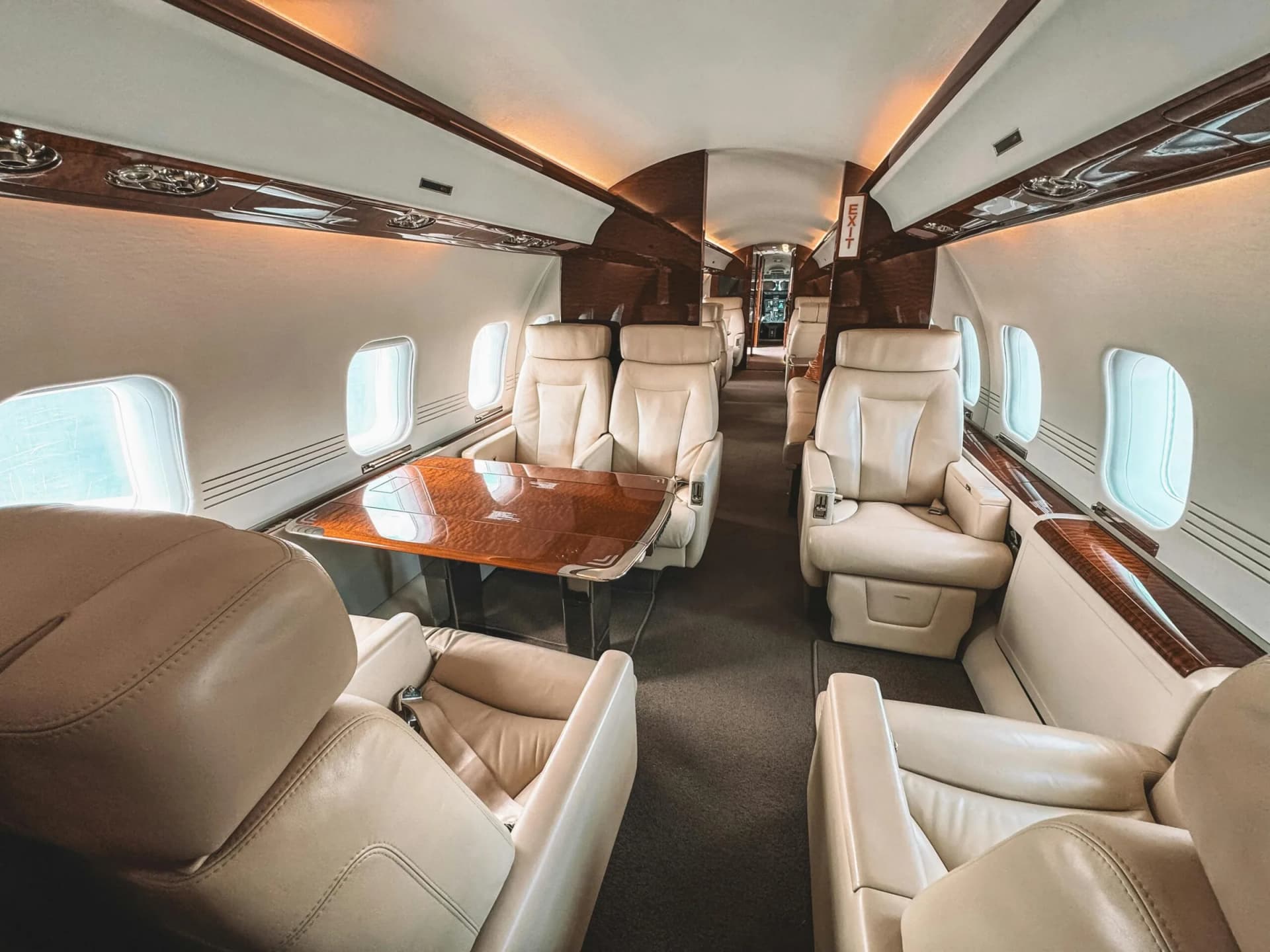
Cabin Condition Influences Perceived Aircraft Value
Passengers and prospective buyers often form an opinion of an aircraft within moments of boarding.
They notice the condition of the entryway, carpet, seat bolsters, armrests, sidewalls, tables, and headliner before they evaluate individual technical details. A cabin with cracked leather, collapsed cushions, stained carpet, or mismatched panels may feel older than the aircraft’s actual age.
This does not necessarily mean that the aircraft has been poorly maintained mechanically. However, visible interior neglect can create doubt about the condition of less visible areas.
For brokers and sellers, that perception can influence:
Listing photography
Buyer confidence
Pre-buy discussions
Time on market
Negotiation leverage
Perceived refurbishment cost
Overall presentation compared with competing aircraft
For charter operators, interior condition also affects whether the cabin appears consistent with the rate being charged.
Private jet interior restoration helps correct those value signals before they become part of the buyer’s or passenger’s first impression.
Leather Condition Is Usually the First Interior Value Signal
Seat leather is one of the most visible and frequently touched materials in a private aircraft cabin.
Common signs of wear include:
Creasing
Surface abrasion
Color loss
Cracking
Scuffed bolsters
Stretched panels
Worn piping
Damaged stitching
Body-oil contamination
Discoloration around armrests and headrests
Not every worn seat requires complete reupholstery.
When the leather remains structurally sound, private jet seating restoration may include professional cleaning, color correction, localized refinishing, seam repair, panel replacement, piping repair, or selective replacement of damaged sections.
This approach can preserve serviceable original material while correcting the areas that most affect cabin appearance.
However, surface restoration is not appropriate when the leather has become brittle, deeply cracked, extensively stretched, or structurally weak. In those cases, repeated cosmetic repair may provide only a temporary improvement.
Full aircraft seat reupholstery may better protect cabin value when:
Multiple panels are failing
The leather has lost flexibility
Previous repairs are visible or unstable
Color varies significantly across the cabin
Stitching is failing throughout the seat
The existing material cannot support another durable repair
The cabin is undergoing a complete design update
The correct decision should be based on the condition of the leather, not simply on whether the visible damage can be covered.
Luxury Jet Leather Maintenance Helps Prevent Larger Repairs
Leather deterioration often begins gradually.
Body oils, perspiration, friction, sunlight, cleaning chemicals, and repeated flexing can weaken the finish long before the leather tears. Once the protective finish is compromised, contamination and abrasion may begin affecting the material underneath.
Routine luxury jet leather maintenance may include:
Inspection of high-contact areas
Cleaning with compatible products
Early treatment of color loss
Repair of minor seam openings
Restoration of worn protective finishes
Correction of localized scratches and scuffs
Monitoring of leather flexibility and dryness
Addressing these issues early may reduce the need for panel replacement or full reupholstery later.
Maintenance should remain material-specific. Products intended for automotive, residential, or general-purpose leather may not be suitable for the leather and finish installed in a particular aircraft.
Foam Affects Comfort, Shape, and Upholstery Performance
Seat foam is largely hidden, but it has a major effect on cabin appearance and passenger comfort.
Collapsed or deteriorated foam can cause:
Uneven seat height
Loss of lumbar or lateral support
Wrinkled leather
Loose upholstery
Distorted bolsters
Pressure points
Poor cushion recovery
A visibly tired seat profile
Even high-quality upholstery work may look incorrect if the supporting foam no longer holds the intended shape.
During aircraft cabin restoration, foam should be evaluated for:
Density
Compression
Shape retention
Odor
Contamination
Deterioration
Fit beneath the cover
Compatibility with the original seat geometry
Cushion rebuilding can restore the seat profile and improve the fit of repaired or replacement upholstery. However, foam changes should not be treated as ordinary furniture work.
Excessive thickness, density, or softness can alter occupant position, seat appearance, restraint alignment, or access to nearby components. The objective is to restore support and shape without unnecessarily changing the seat’s intended geometry.
Foam Can Also Retain Odors and Contamination
Odor problems do not always originate from the visible upholstery.
Seat foam and underlying materials may retain:
Smoke
Food and beverage spills
Body oils
Moisture
Pet odors
Cleaning-product residue
Long-term cabin contamination
Surface cleaning alone may temporarily improve the smell without addressing the source.
When odor has penetrated the cushion structure, the restoration plan may require foam treatment or replacement, along with cleaning or replacement of adjacent materials.
This is particularly important when an aircraft is being prepared for charter use or resale. A cabin may appear clean in photographs but still create an immediate negative impression when a passenger or buyer boards the aircraft.
Sidewalls and Panels Create the Visual Structure of the Cabin
Seats receive much of the attention during an aircraft interior refurbishment, but panels and trim establish the visual framework around them.
These components may include:
Upper and lower sidewalls
Dado panels
Window surrounds
Bulkheads
Headliners
Arm ledges
Cabin dividers
Entry panels
Decorative inserts
Closet and monument surrounds
Common problems include scratches, staining, fading, loose trim, damaged upholstery, uneven color, delamination, and previous repairs that no longer match.
Because these surfaces run through the entire cabin, even minor inconsistencies can make the interior feel fragmented.
Corporate jet interior upgrades often include refinishing or recovering selected panels to coordinate with the seating, carpet, cabinetry, and cabin lighting.
The goal should not necessarily be to redesign every surface. In many cases, the most effective approach is to restore consistency by correcting the panels that are visibly damaged or no longer fit the cabin’s overall color scheme.
Panel Work Requires Careful Material and Fit Control
Aircraft interior panels are not simply decorative wall coverings.
They may incorporate substrates, padding, upholstery materials, attachment systems, access points, and adjacent components that must remain serviceable.
Panel refurbishment should account for:
Material suitability
Weight
Thickness
Seam and edge placement
Attachment methods
Access to underlying components
Alignment with windows and cabinetry
Fire-performance requirements where applicable
Compatibility with adjacent surfaces
An over-padded panel, incorrect adhesive, or poorly positioned seam can affect fit and create visible distortion.
Professional aircraft interior refurbishment requires precise patterning and installation rather than applying a new decorative surface without considering the complete assembly.
Headliners Have a Disproportionate Effect on Cabin Appearance
The headliner is one of the largest continuous surfaces in the cabin.
Even subtle discoloration, sagging, staining, or uneven seams can make the entire interior appear dated. Because light reflects across the headliner, small differences in texture or color may become more noticeable than they would on a lower panel.
Headliner work may be considered when there is:
Discoloration
Sagging
Staining
Loose material
Visible seam distortion
Damage near vents, lighting, or access panels
A mismatch with newly restored seating and sidewalls
The material and installation method must remain appropriate for the aircraft. Access to lighting, ventilation, emergency equipment, and maintenance points must also be preserved.
Carpet Wear Can Reduce Perceived Cleanliness
Aircraft carpet is exposed to constant use.
Boarding traffic, luggage, catering carts, maintenance activity, pets, footwear, and repeated cleaning can create:
Matting
Staining
Fading
Edge wear
Damaged binding
Odor retention
Loose sections
Wear around seat tracks and thresholds
Worn carpet can make an otherwise refined cabin appear neglected.
Because carpet extends through much of the cabin, replacement often produces one of the most immediate visual improvements during private jet interior restoration.
Material selection should consider:
Durability
Weight
Stain resistance
Cleanability
Pile height
Backing
Binding
Color coordination
Fit around tracks, monuments, and access points
A thicker or heavier carpet is not automatically better. The material must fit accurately around cabin structures and should not interfere with seat movement, floor access, or other functional elements.
Carpet Color Influences the Entire Cabin
Carpet occupies a large visual area and affects how the colors of the leather, cabinetry, and sidewalls are perceived.
A very dark carpet may create contrast and conceal some wear, but it can also make a small cabin feel more enclosed. A lighter carpet may make the cabin feel larger and brighter but may show staining more quickly.
The selection should consider:
Cabin dimensions
Natural and artificial lighting
Seat and panel colors
Frequency of use
Charter or private operation
Maintenance expectations
Long-term design flexibility
When the aircraft may be sold in the near future, a neutral and coordinated interior often appeals to a broader range of buyers than a highly personalized color scheme.
Materials Should Be Coordinated as a Complete Cabin System
One of the most common weaknesses in partial interior projects is treating each material independently.
New leather may look too bright beside aged sidewalls. New carpet may make existing seat wear more visible. Restored panels may highlight a stained headliner. Replacement foam may change the shape of only some seats, creating an inconsistent cabin profile.
A coordinated aircraft interior refurbishment evaluates how every material relates to the others.
The review should include:
Seat leather
Stitching and piping
Foam profiles
Armrests
Sidewalls
Headliners
Carpet
Cabinetry
Metal finishes
Cabin lighting
Existing color temperature
The objective is not necessarily to replace everything. It is to understand how changing one component will affect the appearance of the rest of the cabin.
Repair, Selective Replacement, or Full Refurbishment?
Not every aircraft requires a complete interior replacement.
The appropriate scope may be divided into three general levels.
Localized Repair
Localized repair may be appropriate for:
Minor leather scuffs
Small areas of color loss
Individual seam failures
Worn armrests
Limited bolster damage
Isolated panel scratches
Small carpet-edge problems
This approach preserves the greatest amount of original material and minimizes downtime.
Selective Restoration and Replacement
A selective project may include:
Replacing several seat panels
Rebuilding foam in specific cushions
Recovering damaged sidewalls
Replacing carpet
Restoring leather throughout the cabin
Updating armrests and decorative elements
This is often effective when most of the interior remains serviceable but several highly visible components have aged unevenly.
Complete Aircraft Interior Refurbishment
A broader refurbishment may be appropriate when:
Materials are failing across the cabin
The design appears significantly outdated
The aircraft is being repositioned for sale or charter
Previous repairs have created inconsistent finishes
Odors or contamination affect multiple components
Seating, panels, and carpet all require major work
The owner wants a coordinated cabin redesign
The correct scope should balance condition, aircraft use, downtime, budget, market position, and expected ownership period.
Private Jet Interior Restoration and Resale Confidence
A restored cabin does not automatically increase an aircraft’s appraised value by the full amount spent on the work.
However, interior condition can affect buyer confidence and the perceived cost of taking ownership.
A buyer evaluating a worn cabin may mentally deduct not only the estimated refurbishment cost but also:
Expected downtime
Material-selection effort
Project-management risk
Possibility of hidden damage
Uncertainty about records
Concern about matching existing finishes
A coordinated, well-documented interior can reduce those concerns and make the aircraft easier to present.
For brokers, preparation may include correcting the defects that appear most clearly in listing photographs and during in-person inspection:
Entry carpet
Seat bolsters
Armrests
Headrests
High-contrast leather wear
Damaged sidewalls
Loose or stained headliner material
The objective should be to present the aircraft accurately and professionally rather than masking structural deterioration with temporary cosmetic work.
Charter Cabins Require a Different Maintenance Strategy
Charter aircraft typically experience more frequent passenger turnover and greater variation in use than privately operated aircraft.
High-contact areas may deteriorate faster, including:
Entry carpeting
Aisle-side bolsters
Armrests
Seat belts and surrounding panels
Tables
Refreshment-center areas
Lavatory seating and panels
For these aircraft, restoration planning should prioritize durability, cleanability, repeatable color matching, and the ability to repair isolated damage without replacing an entire cabin section.
A maintenance program may include regular inspection, early leather repair, staged panel restoration, and scheduled carpet replacement before wear becomes highly visible in charter photographs or client visits.
What to Review Before Starting Aircraft Interior Refurbishment
Before approving the project, review the complete cabin rather than focusing on one visibly damaged component.
Seating
Evaluate:
Leather condition
Stitching integrity
Piping wear
Bolster damage
Armrest condition
Cushion shape
Seat-to-seat color consistency
Foam
Evaluate:
Support
Density
Compression
Shape retention
Odor
Fit beneath the existing upholstery
Panels and Headliners
Evaluate:
Scratches
Stains
Loose trim
Fading
Sagging
Material compatibility
Access to surrounding components
Carpet
Evaluate:
Traffic patterns
Matting
Staining
Odor
Edge and binding wear
Fit around tracks and monuments
Documentation and Material Suitability
Confirm:
Material identity
Traceability where applicable
Relevant flammability documentation
Compatibility with the aircraft and component
Responsibility for maintenance approval and return to service
These decisions should be made before materials are ordered and the existing interior is removed.
Questions to Ask an Aircraft Interior Restoration Provider
Which parts of the existing interior can be restored rather than replaced?
Is the leather structurally suitable for refinishing?
Does the seat foam need reshaping or complete replacement?
What is causing any existing cabin odor?
Can individual panels be recovered without creating visible inconsistencies?
What materials are recommended for the aircraft’s use and operating environment?
How will the new carpet fit around seat tracks, thresholds, and monuments?
What material and flammability documentation will be available?
How will cabin weight be affected?
What downtime should be expected?
A professional provider should be able to explain the reasoning behind the proposed scope rather than recommending full replacement by default.
A Strong Cabin Is More Than a Cosmetic Upgrade
Private jet interior restoration protects more than appearance.
It can improve passenger comfort, correct visible maintenance concerns, support charter presentation, reduce buyer uncertainty, and extend the useful life of serviceable cabin components.
The strongest results come from evaluating leather, foam, panels, headliners, and carpet as parts of one interior system.
Whether the aircraft requires localized leather repair, private jet seating restoration, cushion rebuilding, new carpet, panel recovery, or a complete aircraft interior refurbishment, the work should balance:
Appearance
Comfort
Durability
Weight
Material compatibility
Documentation
Fit
Maintenance access
Aircraft use
Long-term cabin value
The goal is not simply to make the cabin look newer. It is to create an interior that feels coordinated, performs properly, and supports confidence in the aircraft.
Request a Private Jet Interior Assessment
Send photographs of the complete cabin, including the seats, bolsters, armrests, carpet, sidewalls, headliner, entry area, and all visible damage.
We can evaluate which components may be restored, which should be selectively replaced, and whether a broader aircraft interior refurbishment would provide a more consistent and durable result.
The recommended materials, scope, documentation requirements, and expected downtime should be reviewed before work begins.